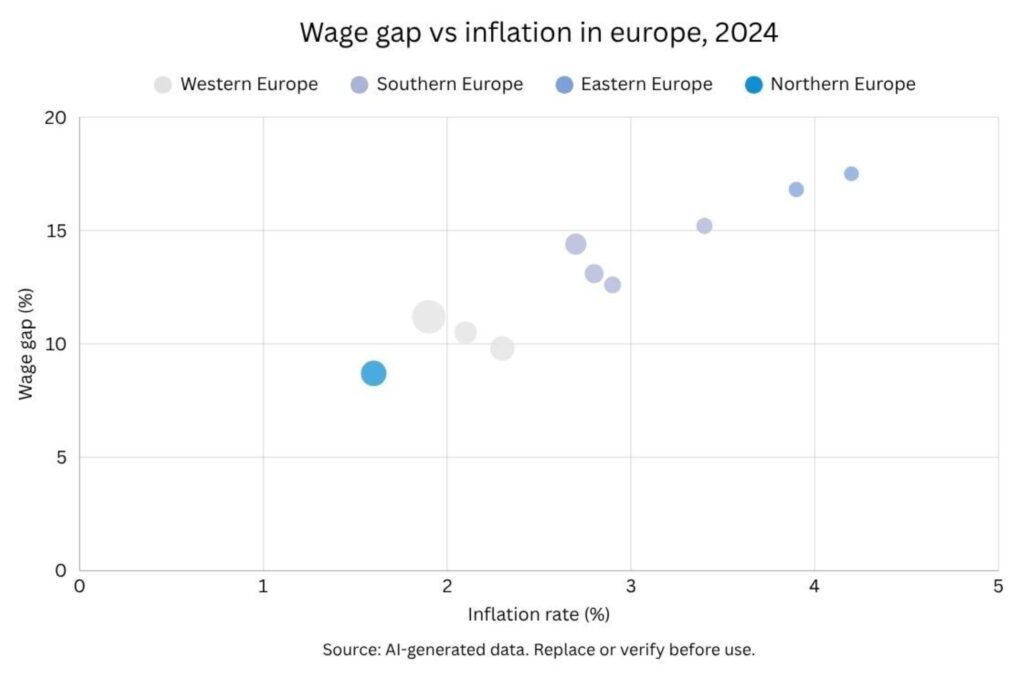


Household inflation shapes the daily financial reality of millions of Europeans, yet official statistics rarely capture this accurately. Every month, Eurostat publishes an inflation figure representing an average across the 27 member states and hundreds of product categories. However, no single household lives an average life. Furthermore, household inflation varies significantly according to income level, location, age and personal spending habits. The figure reported in the news and the figure experienced at the checkout often differ greatly.
How is official inflation calculated in Europe?
Eurostat calculates the EU inflation rate using a standardised basket of goods and services. This basket includes food, housing, transport, healthcare, clothing, and recreation. Each category receives a fixed weight based on average European spending patterns. However, that fixed weight does not reflect every household equally. A retired couple in rural Romania spends very differently from a young professional family in Amsterdam. Consequently, the same official inflation figure can describe 2 completely different financial realities at the same time.

Why low-income households experience higher household inflation
Household inflation is not equal across income levels. Lower-income households spend a larger share of their budget on essential goods such as food, energy, and rent. These categories have experienced some of the sharpest price increases across Europe since 2022. Higher-income households allocate more spending to discretionary categories such as holidays, entertainment, and financial services. These categories often experience slower price growth. As a result, a single official inflation figure systematically understates the financial pressure on lower-income Europeans.
How housing costs distort the household inflation experience
Housing is one of the most significant gaps in official EU inflation measurement. The Harmonised Index of Consumer Prices does not fully include owner-occupied housing costs. This means that for millions of European homeowners, a major real-life cost is largely absent from the official figure. Renters face a different problem. Rent increases in major European cities, including Berlin, Dublin, and Lisbon, have far exceeded general inflation rates in recent years. Consequently, households in high-cost urban areas consistently experience household inflation significantly higher than national statistics suggest.
What one European household discovered about real costs
Marta Kowalski, Primary School Teacher, Wroclaw, Poland
“In 2022, my grocery costs increased by around 30% in less than one year. My salary did not increase at the same rate. Official inflation figures said prices rose by 14%. That number did not match my experience at all.
I began tracking my monthly spending carefully. My personal household inflation rate was nearly double the official figure. Food, heating, and transport costs drove the difference. I had to reduce spending in every other area to maintain basic living standards.”
Europe Spring Fashion 2026: 7 Sustainable Collections
This season, spring fashion in Europe is embracing sustainability like never before. Fashion lovers can explore seven groundbreaking collections that...
WordPress Translation Reinvented by Theo Dumont
WordPress translation just found its biggest challenger, and he comes from Lyon. For years, European website owners paid steep monthly...
Easter Europe 2026: 8 Best Destinations to Visit
Easter celebrations in Eastern Europe transform cities into vibrant cultural showcases, blending religious traditions with spring festivities. What's more, the...
Luxury Fashion: Europe Retail Economics 2026
Luxury fashion retail remains at the heart of European shopping culture and economic vitality. Furthermore, the continent is home to...
How housing costs distort the household inflation experience
Housing is one of the most significant gaps in official EU inflation measurement. The Harmonised Index of Consumer Prices does not fully include owner-occupied housing costs. This means that for millions of European homeowners, a major real-life cost is largely absent from the official figure.
Renters face a different problem. Rent increases in major European cities, including Berlin, Dublin, and Lisbon, have far exceeded general inflation rates in recent years. However, these increases are often averaged across entire national rental markets, which reduces their visible impact on the headline figure.
Consequently, households in high-cost urban areas consistently experience household inflation that is significantly higher than national statistics suggest.

Why wages make the same inflation rate feel different
Prices do not exist in isolation. The real impact of household inflation depends on how wages change in relation to prices. When prices increase faster than wages, households lose purchasing power even if the official inflation rate appears moderate.
Between 2021 and 2024, real wages in several EU countries declined despite falling headline inflation rates. Workers in sectors with limited wage growth, such as retail, hospitality, and social care, experienced sustained financial pressure. In fact, Eurostat data showed that real wage growth across the EU turned negative in 2022 and remained weak through much of 2023.
Furthermore, self-employed workers, part-time employees, and people on fixed pensions face additional exposure. Their incomes do not adjust automatically to price increases the way indexed wages sometimes do.
Conclusion: Household inflation reveals a gap that statistics cannot close
Household inflation is personal. Official figures provide a useful economic benchmark, but they cannot capture the specific spending patterns, income levels, and regional costs that shape each family’s financial reality. Indeed, the gap between the published rate and the lived experience is not a failure of statistics. It is a reflection of how unequal economic pressures are distributed across European society. Understanding this gap is the first step toward making better personal financial decisions. Review your own spending patterns and compare them to official data. The difference may surprise you.
Explore further: resources on inflation and household costs
- European Central Bank: Inflation explained https://www.ecb.europa.eu/ecb/educational/explainers/tell-me/html/what-is-inflation.en.html
- Eurostat: Harmonised Index of Consumer Prices data https://ec.europa.eu/eurostat/web/hicp
- Reuters: European economy and inflation coverage https://www.reuters.com/markets/europe/


Tracking your own personal inflation rate, like Marta did, is genuinely useful advice. Never thought of it that way before.
L’exclusion des coûts du logement en propriété dans l’indice harmonisé, c’est un angle mort énorme. Pour ceux qui ont acheté ces dernières années à Paris ou Bordeaux, les charges réelles n’apparaissent nulle part dans les chiffres officiels.
Lo del peso fijo en la cesta de la compra del Eurostat lo explican muy bien aquí. En Madrid, si eres joven y alquilas, esa cesta no tiene nada que ver con tu realidad. El alquiler te come el sueldo, los alimentos básicos han subido brutalmente, y el índice oficial sigue mezclando eso con categorías que ni tocas. Me pregunto si alguna vez van a diseñar un indicador alternativo por nivel de ingresos, porque sería mucho más honesto.
The comparison between a retired couple in rural Romania and a young professional family in Amsterdam is exactly the kind of framing that makes this click. Same headline number, completely different reality. I moved from a small town to Dublin three years ago and my rent alone went up 60% on what I was paying before. That sort of jump doesn’t show up in any national average in any meaningful way.