

What Is Europe Day and Why Does It Matter?
Europe Day marks the anniversary of the Schuman Declaration, in which Robert Schuman proposed the creation of a European Coal and Steel Community. This proposal marked the first step towards European integration. The idea was simple but transformative: bind the economies of former rivals together so tightly that conflict between them would become impossible.

In 1950, as European countries were still recovering from the devastation of World War II, a group of European politicians envisioned a united Europe to prevent further conflicts. This led to the creation of the European Coal and Steel Community in 1952, bringing together Germany, France, Italy, the Netherlands, Belgium and Luxembourg.
In the decades that followed, that community grew into the 27-member European Union of today. Europe Day is an annual reminder of that journey. It is also an opportunity to measure progress against the founding values of peace, prosperity, and solidarity.
What Economic Progress Has the EU Made in 2026?
European integration has delivered measurable economic results across member states. Economic integration continues advancing despite political challenges. Estonia has achieved 88% renewable electricity, demonstrating successful adaptation to climate challenges, while Croatia’s 99.25% EU funding absorption rate shows the concrete benefits of constructive engagement.
Furthermore, European polling consistently shows 89% of citizens demanding greater EU unity and 86% wanting a stronger global voice, providing democratic legitimacy for ambitious integration initiatives. These numbers reflect a population that sees economic and political union not as an abstract project but as a practical tool for shared prosperity.

The EU single market remains the most powerful driver of economic integration. It connects more than 450 million consumers across 27 member states. For businesses operating across borders, it reduces costs, simplifies trade, and creates a level regulatory environment that strengthens competitiveness globally.
What Are the Key Milestones the EU Is Celebrating in 2026?
Europe Day 2026 carries special weight because of 3 overlapping anniversaries. Each one reflects a different dimension of European integration.
- 76 years since the Schuman Declaration launched the idea of a united Europe
- 40 years since Portugal and Spain joined the EU, completing the integration of Southern Europe
- 40 years since the first official Europe Day celebrations and the public adoption of the EU flag and anthem
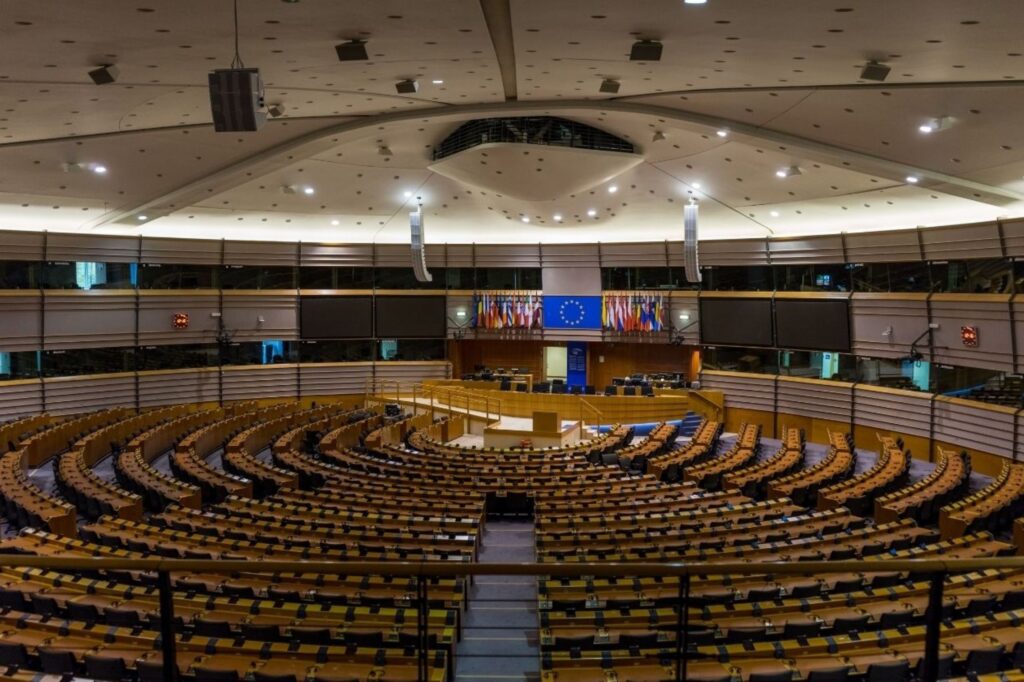
In a rapidly changing world, the EU and its institutions are working to protect democracy, boost prosperity, and strengthen security. These anniversaries are not simply historical markers. They represent active commitments that shape EU policy decisions in 2026 and beyond.
-






Co-production treaty and European cinema
Europe's co-production treaty network is one of the most consequential, yet least visible, forces in the films that reach your...

Infrastructure funds: a retail investor guide
Infrastructure funds listed in the EU give retail investors access to stable, long-term assets once reserved for institutions. But not...








Took my kids to the Open Doors event at the Berlaymont last weekend and honestly the interactive thematic spaces on climate and democracy were better designed than I expected, my eight-year-old still talks about the photo booth with the EU leader shoes. The article does a good job linking Schuman’s 300-word declaration to today’s challenges, but I think it underplays how fragile public support actually is in some member states. The new Eurobarometer numbers look reassuring on the surface, scratch a bit deeper and the picture is more mixed.
The point about the AI Act entering its enforcement phase right around Europe Day is more politically loaded than the article admits.
Was hoping for more detail on the savings and investments union side of things since that part felt rushed. The ECB has been pushing this for a while and it could genuinely shift how cross border investment works in the EU.
Reading this on the train back from Brussels actually, where I went for the Open Day at the Berlaymont last weekend. The interactive thematic spaces were genuinely impressive, especially the one on social justice. My kids loved the red carpet photo booth too. Made me feel like the EU is finally trying to speak to normal people and not just policy wonks.
The Croatian 99.25% EU funds absorption rate jumped out at me because it shows what’s possible when smaller member states genuinely engage with the integration tools available. Living in Brussels I went to the EESC open day last year and the volume of regular citizens showing up was genuinely moving. People care more than the headlines suggest.