

CONTACT
  • Login
  • Register
Upgrade
EUwebzine
Advertisement
  • Home
    • Our Authors
    • Media Kit
    • Terms and Conditions
    • Cookie Policy
    • Contact
  • Business
  • Culture
  • Gastronomy
  • Travel
  • Sustainable living
  • Insights
    • News
    • Beauty
    • Kids
    • Well-being
    • Creativity
    • Sports
  • Global Europe
  • Local Guide
    • Activities in Europe
    • Hotels in Europe
    • Nightlife in Europe
    • Restaurants in Europe
    • Services in Europe
    • Shopping in Europe
  • Home
    • Our Authors
    • Media Kit
    • Terms and Conditions
    • Cookie Policy
    • Contact
  • Business
  • Culture
  • Gastronomy
  • Travel
  • Sustainable living
  • Insights
    • News
    • Beauty
    • Kids
    • Well-being
    • Creativity
    • Sports
  • Global Europe
  • Local Guide
    • Activities in Europe
    • Hotels in Europe
    • Nightlife in Europe
    • Restaurants in Europe
    • Services in Europe
    • Shopping in Europe
No Result
View All Result
EUwebzine
No Result
View All Result
Home Culture

Co-production treaty and European cinema

The treaty network binding European filmmakers together is older, wider, and more powerful than most audiences ever realise.

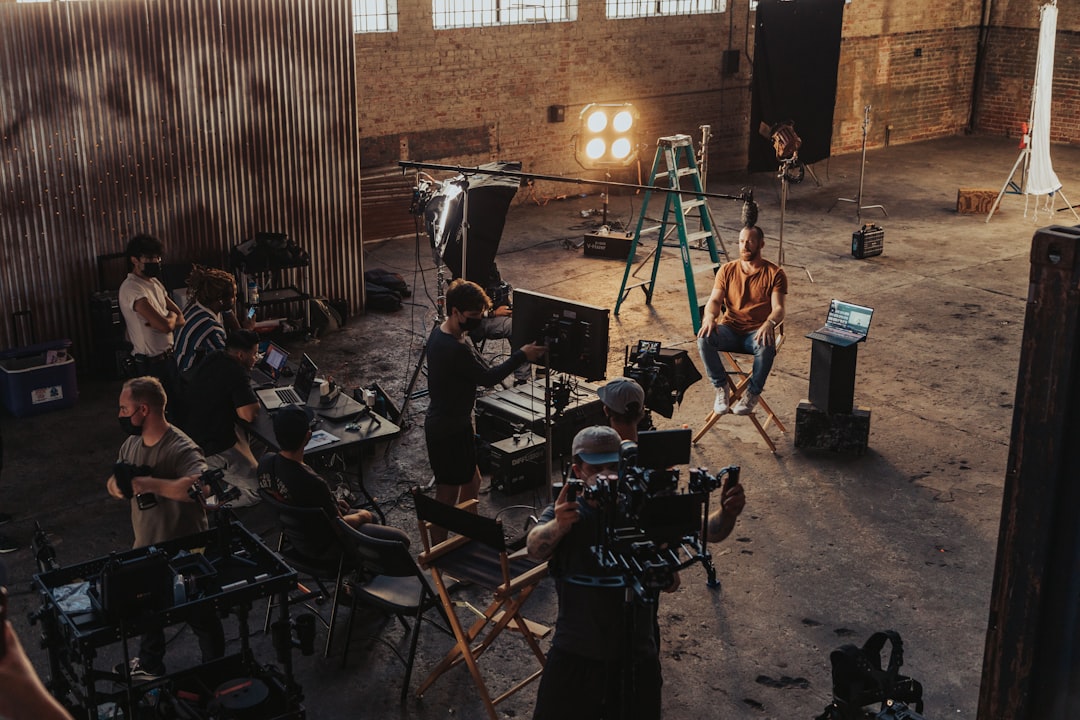
A filmmaker reviews a script at a production desk, representing the creative process behind a co-production treaty.

A co-production treaty is not a bureaucratic formality. It is the quiet architecture beneath the films that carry European memory, language, and landscape to audiences across the continent and beyond.

How the framework was born

Europe’s film industries have always been fragile. They face competition from large commercial markets, and they carry the weight of dozens of languages, histories, and artistic traditions. The foundational legal instrument, the European Convention on Cinematographic Co-Production, opened for signature in 1992, came into force in 1994, and has been signed by 43 European countries. That network established something remarkable: a shared legal ground on which producers from different nations could build a single film together and have it recognised as a legitimate national work in each partner country.

By providing a platform to make cinematographic co-productions more systematic and easier to construct, the 1992 Convention’s contribution to the co-production arena, and therefore to European cinema as a whole, has been fundamental to its success. The convention did not simply reduce paperwork. It gave smaller countries, with smaller film budgets, a way to participate in larger, more ambitious projects. It rewarded collaboration as a cultural act.

The convention functions via a points system that allows a film to be defined as European and therefore access the benefits of the convention. Those benefits are not trivial. They include access to national film funds, television investment requirements, and the EU’s own support mechanisms.

What being “European” means for a film

The question of whether a film is European carries real consequences. The importance of being considered European is emphasised, making it possible for a film to benefit from EU broadcast and VoD quotas under the Audiovisual Media Services Directive. Streaming platforms operating in Europe must meet content quotas, and officially recognised co-productions count toward those quotas in each partner country.

European co-productions can benefit from a country’s film financing system, including selective schemes, automatic support for the domestic producer and distributor, and investment from national television channels. In France, for example, Canal+ and free-to-air networks must invest a percentage of their annual revenues in French and European films. A film that qualifies under the co-production treaty framework becomes eligible for this river of funding that flows directly from broadcast regulation.

Furthermore, research suggests that co-production films travel better than their national equivalents, crossing borders and reaching more international audiences. This is the fundamental promise of the treaty: not just financial access, but wider reach for stories that deserve to be seen.

The revision that opened Europe to the world

Since the adoption of the 1992 Convention, the landscape of European film production changed profoundly. New technology modified production, distribution, and exhibition techniques, public funding at national and regional level evolved, and fiscal incentives multiplied. The treaty needed to grow.

The revised Council of Europe Convention on Cinematographic Co-Production was adopted on 29 June 2016 and opened for signature on 30 January 2017. Its most significant change was one of geography. The revised Convention is now open for accession by non-European countries. This means that a producer in Latin America, South Africa, or Australia can now participate in an officially recognised European co-production under a single legal framework, rather than relying on a patchwork of bilateral agreements.

In October 2018 the revised Convention came into force. Among the important changes introduced by this revised Convention are new rules on the maximum and minimum participation percentages for multilateral and bilateral co-productions. The convention eased the conditions for minority co-producers, reducing their minimum participation to 5% in multilateral co-production and 10% in bilateral arrangements. This lower threshold made it viable for smaller national industries to contribute to ambitious projects that they could never have financed alone.

-

A woman reads a minority language poetry collection in a European library, surrounded by shelves of multilingual literary.

Minority language publishing’s boldest voices

27/08/2026
A crowd of people seated on a summer evening watching an open-air cinema screening at a European festival

Open-air cinema festivals in Europe

05/08/2026
A competitive runner crosses the finish line at a stadium during a European athletics championship event, celebrated by fans.

European athletics and the EU city brand

19/07/2026
A filmmaker reviews footage on a laptop during a Creative Europe supported film production project

Creative Europe: funding films, music, theatre

15/07/2026
A writer reads from her nominated fiction at a ceremony celebrating the EU Prize for Literature

EU Prize for Literature and small voices

28/06/2026
Wiener Stadthalle arena packed with fans during Eurovision 2026 live show in Vienna Austria

Eurovision 2026: Host City Guide and Fan Experience

07/05/2026

Film producers from different countries collaborate in a meeting room, reflecting the cross-border cooperation enabled.

Expert perspective on co-production treaty value

The legal framework for international co-productions is far more than a technical document. It is the foundation on which European cinema’s diversity rests. When producers from Portugal, Poland, and Greece share a project under the treaty umbrella, they are not simply sharing costs. They are pooling creative traditions, national audiences, and cultural legitimacy. The convention’s points system rewards this genuine collaboration. Films that emerge from these partnerships carry a layered identity that purely national productions cannot replicate. For the audience, this means richer stories. For the industry, it means access to funding, distribution, and quotas that would otherwise be unavailable. The treaty network is, in the most direct sense, one of Europe’s great cultural policy achievements.

Industry perspective, European audiovisual and film policy professionals

The MEDIA programme as the engine of circulation

A co-production treaty creates the legal and financial conditions for a film to exist. The EU’s MEDIA programme then helps that film travel. For years, Creative Europe’s MEDIA programme has been the key EU support for filmmakers, helping films to travel beyond their national borders and find new audiences.

MEDIA receives the largest share, a minimum of 58%, of Creative Europe’s budget. MEDIA’s budget for 2024 is around 186 million euros. A share is allocated to support film development through slate development or co-development programmes, but most of MEDIA’s money goes to support the circulation of European content, with distribution receiving the largest share.

Since 1991, Creative Europe MEDIA has invested over 2.6 billion euros in the film and audiovisual industries to support the development, promotion, and distribution of European works within Europe and beyond. Its long-standing support has strengthened the competitiveness of the sector and has contributed to enriching Europe’s cultural diversity. Together, the treaty and the MEDIA programme form an ecosystem. The treaty gives a film its identity. MEDIA gives it an audience.

Audiences watching a film in a European cinema, experiencing stories made possible by the EU co-production treaty framework.

Conclusion: the treaty network and the future of European cinema

The co-production treaty network is one of the most important and underappreciated structures in European cultural life. It protects cinematic diversity against the pressure of a global content market that rewards uniformity. It allows a Greek director, an Irish producer, and a Dutch cinematographer to build a film that belongs, legally and culturally, to each of their countries. Every such film is an act of European civilisation: a proof that our differences, gathered together, produce something more profound than any single national tradition could achieve alone. If you value the richness of the films that reach your screen, the co-production treaty deserves your attention, your respect, and your advocacy. Explore how this network shapes the art that defines us.

Discover more about co-production treaty

  • Council of Europe Convention on Cinematographic Co-Production (revised)
  • The Legal Framework for International Co-Productions, European Audiovisual Observatory
  • Could EU’s New Financing Schemes Reshape the European Film Industry? (Screen Daily, 2025)

author avatar
Valentina Romano
Valentina Romano studied art history at La Sapienza in Rome and has spent her career writing about European cultural heritage, architecture, and the continent's artistic identity. From the Vatican Museums to contemporary Roman design studios, she covers Europe's past and present with equal passion. Her work celebrates the depth and diversity of European civilisation.
See Full Bio
Previous Post

Infrastructure funds: a retail investor guide

Next Post

EU regional cheeses at peak in September

Related Posts

A woman reads a minority language poetry collection in a European library, surrounded by shelves of multilingual literary.
Culture

Minority language publishing’s boldest voices

27/08/2026
A crowd of people seated on a summer evening watching an open-air cinema screening at a European festival
Culture

Open-air cinema festivals in Europe

05/08/2026
A competitive runner crosses the finish line at a stadium during a European athletics championship event, celebrated by fans.
Culture

European athletics and the EU city brand

19/07/2026
A filmmaker reviews footage on a laptop during a Creative Europe supported film production project
Culture

Creative Europe: funding films, music, theatre

15/07/2026
A writer reads from her nominated fiction at a ceremony celebrating the EU Prize for Literature
Culture

EU Prize for Literature and small voices

28/06/2026
Next Post
A woman tasting EU regional cheeses in a stone cellar, surrounded by ageing wheels on wooden shelves

EU regional cheeses at peak in September

Leave a Reply Cancel reply

Your email address will not be published. Required fields are marked *

Truelang, tranlation plugin Truelang, tranlation plugin Truelang, tranlation plugin
No Result
View All Result

Our Focus

EUwebzine is your international window on Europe: lifestyle, business, culture, sports and events for a global audience following the continent's evolving story.

Our Readers

EUwebzine addresses readers who engage with Europe at a high level: professionally, financially, strategically, and as decision-makers in their fields.

Our Approach

Lifestyle, policy, and culture are integrated as context and indicators of economic cohesion, political direction, and Europe's role on the global stage, not standalone entertainment.

Recent Post

  • State aid rules for EU startups
  • Forest bathing programmes in Europe

© 2026 EUwebzine by NOOR & NOOR — part of WEBZINE.world.

Welcome Back!

Login to your account below

Forgotten Password? Sign Up

Create New Account!

Fill the forms bellow to register

All fields are required. Log In

Retrieve your password

Please enter your username or email address to reset your password.

Log In
Manage Consent
To provide the best experiences, we use technologies like cookies to store and/or access device information. Consenting to these technologies will allow us to process data such as browsing behavior or unique IDs on this site. Not consenting or withdrawing consent, may adversely affect certain features and functions.
Functional Always active
The technical storage or access is strictly necessary for the legitimate purpose of enabling the use of a specific service explicitly requested by the subscriber or user, or for the sole purpose of carrying out the transmission of a communication over an electronic communications network.
Preferences
The technical storage or access is necessary for the legitimate purpose of storing preferences that are not requested by the subscriber or user.
Statistics
The technical storage or access that is used exclusively for statistical purposes. The technical storage or access that is used exclusively for anonymous statistical purposes. Without a subpoena, voluntary compliance on the part of your Internet Service Provider, or additional records from a third party, information stored or retrieved for this purpose alone cannot usually be used to identify you.
Marketing
The technical storage or access is required to create user profiles to send advertising, or to track the user on a website or across several websites for similar marketing purposes.
  • Manage options
  • Manage services
  • Manage {vendor_count} vendors
  • Read more about these purposes
View preferences
  • {title}
  • {title}
  • {title}
No Result
View All Result
  • Home
    • Our Authors
    • Media Kit
    • Terms and Conditions
    • Cookie Policy
    • Contact
  • Business
  • Culture
  • Gastronomy
  • Travel
  • Sustainable living
  • Insights
    • News
    • Beauty
    • Kids
    • Well-being
    • Creativity
    • Sports
  • Global Europe
  • Local Guide
    • Activities in Europe
    • Hotels in Europe
    • Nightlife in Europe
    • Restaurants in Europe
    • Services in Europe
    • Shopping in Europe

© 2026 EUwebzine by NOOR & NOOR — part of WEBZINE.world.

Not enough quota to unlock this post
Unlock left : 0
Are you sure want to cancel subscription?
Verified by MonsterInsights
enEnglishdeDeutschesEspañolfrFrançaisnlNederlands