
The EU political agenda reaches its peak each June, driven by a structural convergence of parliamentary votes, a leaders’ summit, and the end of the Council presidency cycle that forces decisions before the summer recess.
Why June creates a natural bottleneck
The EU runs on a structured annual calendar. Parliament decides its annual calendar on the basis of a proposal by the Conference of Presidents, and that calendar divides into plenary sittings and committee meetings. June sits at the end of the spring legislative cycle, just before the summer break. That placement creates pressure across all 3 major EU institutions at the same time.

With each June marking the end of a 6-month Council presidency, the outgoing presidency typically presents its results, and the incoming presidency assumes leadership on 1 July. This handover forces ministers and working groups to close negotiations before the transition. Files that are not resolved in June risk losing momentum entirely.
The result is a fortnight in which votes, summits, and high-level conferences overlap. Policymakers, lobbyists, and investors all need to be present and prepared. Missing June means missing decisions that set the direction for the rest of the year.
What the Parliament plenary covers
The June plenary session consistently covers EU enlargement and competitiveness, accession in the Western Balkans, and preparations for the June European Council. Members also consider key legislation on artificial intelligence, trade, support for farmers, water governance, new genomic techniques, and the circular economy.
MEPs hold final votes on files such as new rules for plants obtained with new genomic techniques, new circularity rules for the automotive sector, and measures to reinforce farmers’ positions in the food supply chain. MEPs also debate and vote on simplifying certain rules within the EU’s Artificial Intelligence Act as part of the digital omnibus package.

The plenary also outlines Parliament’s expectations for the June EU summit and debates how the EU can achieve digital sovereignty and resilience. In practical terms, this means that legislators, technical experts, and industry representatives must all be engaged simultaneously. The workload does not spread out; it concentrates.
The European Council summit sets the political direction
The European Council summit lands at the end of June, and it carries significant weight. The meeting has a full agenda, and global affairs have grown tense and unpredictable over recent years. Leaders must respond to external pressures while also progressing on internal priorities.
EU leaders are expected to discuss Ukraine, European defence and security, the EU in the world, competitiveness, migration, Moldova, the Western Balkans, internal security, and EU preparedness. That list is not symbolic. Each item represents active legislative or diplomatic files that need political guidance from heads of state and government.
Leaders can set the EU on a path to strategic autonomy by linking security, economy, and climate in a single vision. The June summit is therefore crucial for determining Europe’s approach to an increasingly challenging geopolitical and geoeconomic context, with leaders steering efforts across security, defence, competitiveness, and decarbonisation. The connection between those topics is not accidental. The EU’s competitiveness agenda now sits firmly inside its green and digital transitions.

Expert perspective on June’s legislative intensity
The EU’s June fortnight is not simply a scheduling coincidence. It reflects how the institutional cycle is built. The end of a Council presidency creates a hard deadline that concentrates trilogues, Council general approaches, and Parliament votes into a very short window. For industries that depend on EU regulation, particularly in clean technology, digital infrastructure, and sustainable finance, these 2 weeks can determine the regulatory environment for the next 3 to 5 years. Businesses that do not engage with the EU political agenda in June often find themselves reacting to rules they could have shaped. The green economy transition, in particular, moves through legislation: the Circular Economy Act, carbon border adjustments, and new genomic technique rules all passed through June sessions. Active monitoring and timely engagement during this period is not optional for serious market participants. It is a core strategic function.
Industry perspective, EU policy and sustainability investment professionals
Green economy events reinforce the legislative push
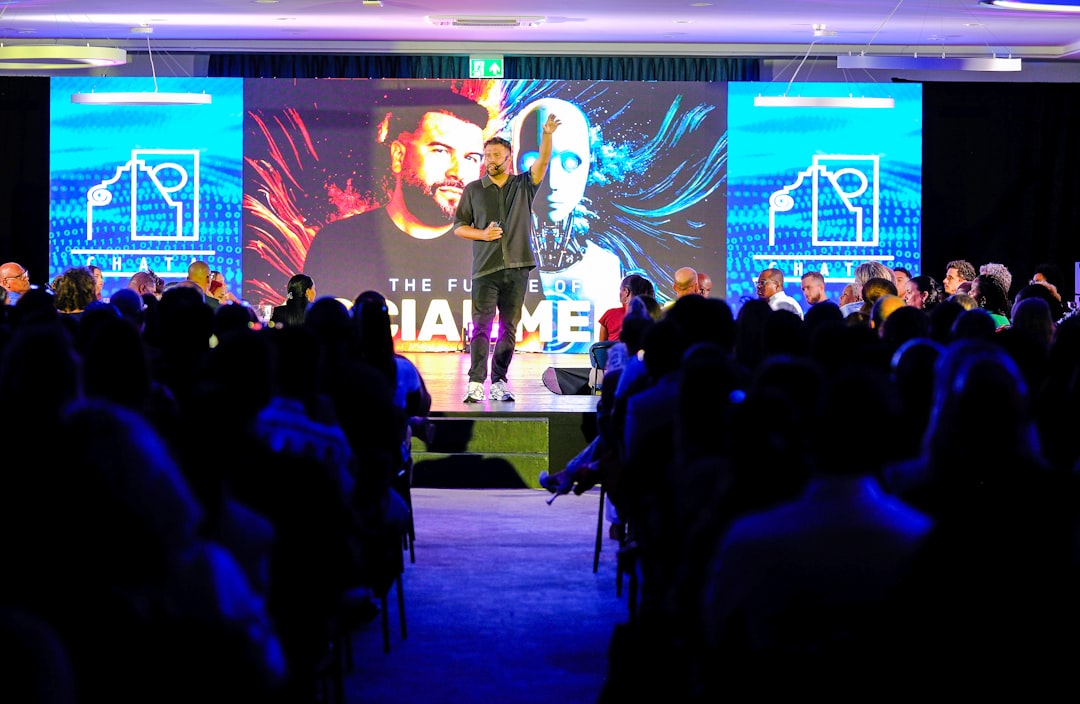
June is not only about formal institutional sessions. The EU Green Week, which focuses on the business case for nature and a nature-positive economy, takes place in early June and features a high-level conference in Brussels with panel discussions, TED-like talks, and a dedicated startup-investor matchmaking event.
-



The European Circular Economy Stakeholders Platform, a flagship initiative by the European Economic and Social Committee and the Commission, has used EU Green Week to explore how the circular economy can enhance sustainable competitiveness, reduce waste, and drive innovation. These events feed directly into ongoing legislative work. A Competitiveness Compass and the Clean Industrial Deal provide new direction and impetus, and the circular economy offers solutions by driving sustainable competitiveness, reducing waste, increasing strategic autonomy, and promoting innovation.
Finance ministers also aim to agree on positions such as strengthening the carbon border adjustment mechanism, while the Commission holds major urban and sustainability conferences during the same weeks. The green and political agendas are not separate tracks. They run together in June because the EU designed them that way.
Conclusion: June demands attention from everyone who tracks EU policy
The EU political agenda does not operate at an even pace throughout the year. June is the month when preparation converts into decision. A Parliament plenary finalizes legislation. A leaders’ summit sets strategic direction. Green economy conferences produce the policy inputs that feed the next legislative cycle. For anyone working in sustainable investment, innovation, or EU regulatory strategy, this fortnight is the most important 2 weeks on the calendar. Follow the EU political agenda in June, and you follow where Europe is heading. Miss it, and you spend the rest of the year catching up.
*Thomas van der Berg covers EU institutional strategy and the green economy for EUwebzine. Follow his analysis each month.*
Discover more about EU political agenda
- European Parliament plenary session, June 2026 overview
- EU Green Week 2026: Investing in a nature-positive economy
- European Council meeting June 2025740274_EN)741516_EN.html)740741)774657)