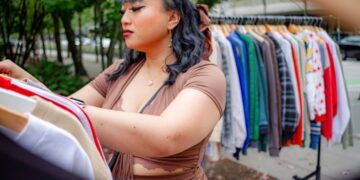

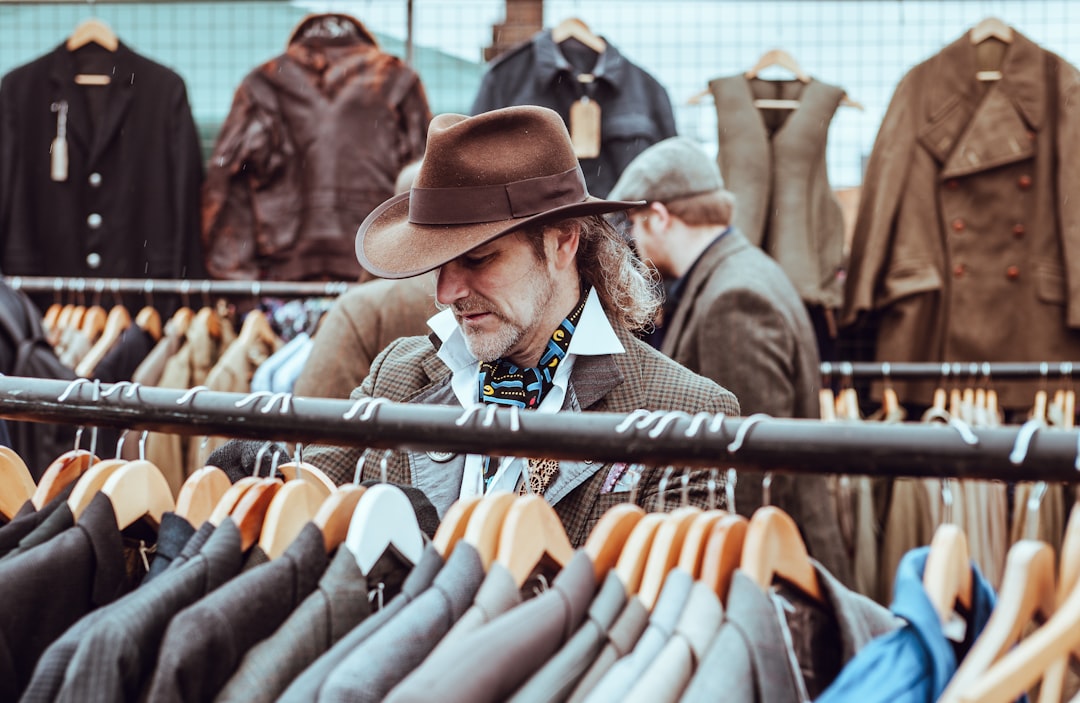
EU Ecolabel clothing moves through European stores like a quiet promise, but few consumers know how to tell the genuine article from a beautiful lie.
What the EU Ecolabel actually guarantees
The EU Ecolabel is a voluntary certification awarded to textile products that meet the highest environmental standards across their entire lifecycle. It ensures that certified products are produced with fewer emissions, consume less water and energy, and contain minimal hazardous substances, all while maintaining durability and high quality.
For textile products, the label guarantees more sustainable fibre production, a less polluting production process, strict restrictions on the use of hazardous substances, and a long-lasting final product. This is not a brand promise. It is a verified standard backed by European law.
The European Commission sets EU Ecolabel criteria for different categories of products to minimise their environmental impacts over their entire lifecycle, while guaranteeing high quality. Because each product category is different, the criteria are tailored to address their unique characteristics. All criteria are developed in consultation with key stakeholders, including consumer associations and experts in the relevant field. That process gives the label genuine credibility.
How to verify EU Ecolabel clothing before you buy
The first thing to look for is the flower logo, a distinctive white flower with blue petals and a blue E at its centre. The EU Ecolabel is a third-party certified Type I ISO 14024 label, recognised across Europe as a mark of environmental excellence awarded to products and services meeting high environmental standards throughout their life cycle, from raw material extraction to production, distribution, and disposal.
Every certified product carries a licence number. Found on thousands of everyday goods and services, whether online or offline, the EU Ecolabel flower guides consumers towards products with demonstrated environmental excellence. You can confirm any licence number directly in the EU Ecolabel Product Catalogue on the European Commission website. If a number does not appear there, the label is not authentic.

Unlike generic sustainability claims, the EU Ecolabel is a trusted, third-party certification backed by strict scientific criteria and regulatory compliance. This distinction matters enormously when you stand in a store surrounded by tags that say “eco”, “green”, or “conscious” without any supporting evidence.
Recognising greenwashing in EU fashion retail
Greenwashing is the marketing practice of giving a false impression of the environmental impact or benefits of a product. In fashion, it takes many forms, some obvious and some remarkably subtle.
The Empowering Consumers for the Green Transition (ECGT) Directive is an EU consumer-protection law that regulates how environmental claims can be made to consumers. Adopted in March 2024 as Directive (EU) 2024/825, it amends existing EU consumer law to directly address greenwashing at the point of sale. Any claim that implies environmental benefit, on product labels, hangtags, websites, marketing campaigns, or collection names, must be specific, verifiable, and supported by recognised evidence. Generic claims, vague language, and self-created eco-labels are explicitly prohibited.
The ECGT bans claims that a product has a neutral, reduced, or positive impact on the environment if that claim relies on carbon offsetting. Many fashion brands currently claim their polyester garments are “Carbon Neutral” because they purchased credits from a tree-planting scheme. This is now banned. When you see this claim on a garment, it signals a brand that prioritises marketing over substance.







Expert perspective on EU Ecolabel clothing and consumer trust
The EU Ecolabel represents one of the most rigorous third-party verification systems available to fashion consumers in Europe today. What distinguishes it from the dozens of self-created brand seals is precisely this independent verification process: a producer cannot simply design a green leaf and print it on a hangtag. The certification requires documented proof at every stage of the supply chain, from fibre sourcing to final production, with ongoing compliance checks. Consumers who learn to recognise the flower logo and verify the licence number gain a genuinely powerful tool. They stop being passive recipients of marketing and become active participants in a more responsible textile economy. The challenge is education: too many Europeans still cannot distinguish a certified label from a decorative one, and this gap is exactly where greenwashing thrives.
Industry perspective, sustainability and certification professionals in the European textile sector
What EU textile law now requires from brands
In 2024, the UCPD was amended by the Empowering Consumers for the Green Transition Directive (ECGT), which strengthened the rules on sustainability-related claims by explicitly banning certain practices, such as generic environmental claims without evidence, claims based solely on carbon offsetting, and unapproved sustainability labels.
EU member states must transpose the ECGT into national law by March 2026, with the updated rules applying from September 2026. From that point on, authorities will be able to issue fines and require corrective actions if the rules are not followed. For consumers, this means the market will gradually become more transparent. For now, you still need to verify claims yourself.
Criteria are periodically revised by the EU Ecolabelling Board (EUEB), which takes into account technical innovations or market changes to ensure they are up to date, robust, and trustworthy. This ongoing revision process keeps the standard meaningful rather than static.

Your practical guide to shopping certified
Before you purchase any garment with a sustainability claim, apply 3 simple checks. First, look for the EU Ecolabel flower logo and the licence number printed beneath it. Second, search that number in the official EU Ecolabel Product Catalogue. Third, treat any label without a verifiable third-party certifier as decoration, not evidence.
Four out of 5 European consumers prioritise sustainability when making a purchase, yet many struggle to verify a brand’s claims. This guide gives you the tools to belong to the smaller, more discerning group that does verify.
Conclusion
EU Ecolabel clothing represents a genuine standard in a market full of noise. The flower logo and its licence number are your clearest indicators of authentic certification. By certifying only the most responsible textile products, the EU Ecolabel helps brands prove their sustainability claims and gives consumers a trusted way to shop greener. The next time a hangtag promises something beautiful and vague, trust the EU Ecolabel instead. It carries the weight of European law, independent verification, and a commitment to quality that greenwashing simply cannot replicate. Dress consciously. Verify first.
Discover more about EU Ecolabel
- EU Ecolabel for Clothing and Textiles (European Commission)
- EU ECGT Greenwashing Rules for Fashion Brands (GreenStitch, 2026)
- How Europe Is Using Taxes to Slow Down Fast Fashion (The Conversation, 2026)