

EU diplomacy is rarely truly quiet in late summer, and the weeks before parliaments return carry a weight that rivals the busiest days of the formal legislative calendar, shaping decisions that will define how Europe governs itself through the months ahead.
The silence that speaks loudest
Europe’s late summer carries a particular beauty. From the terraced squares of Valletta to the baroque corridors of Vienna, the continent breathes slowly in August. Yet inside EU institutions, a different rhythm continues. It is quieter, yes, but it is not empty. The informal conversations, the careful positioning, and the strategic planning that fill late summer create the architecture of the autumn legislative cycle.

This is not a modern invention. Europe has always prepared its great works in private before presenting them in public. The medieval builders of Chartres Cathedral sketched their plans in quiet workshops long before the first stone rose. EU diplomacy operates on the same principle. The decisions that appear in September and October trace their origins to summer groundwork that rarely makes front pages.
The commissioner seminar and what it signals
The work programme of the European Commission goes on hold until 4 September, the date of the traditional seminar of the College of Commissioners, the meeting usually held outside Brussels to set the work agenda for the autumn legislative cycle. This gathering, modest in public profile but enormous in consequence, defines the order in which legislation will reach the Parliament’s chambers.
The commissioners must begin work on draft legislation covering affordable housing, the Innovation Act, public procurement, and the package for the outermost regions, all expected as early as 9 September. Each of these files carries deep cultural and civic weight. Housing shapes the cities Europeans live in. Procurement rules determine whether public money supports local craftspeople or distant suppliers.
On 15 September, the package on fair labour mobility is expected, comprising 3 legislative proposals: a European social security card, the strengthening of the European Labour Authority, and an initiative on skills portability. These proposals will touch millions of European lives. Yet their direction is set in the quiet of early September, before most citizens notice that the summer break has ended.

Ambassadors, alignment, and the art of strategic preparation
Beyond the Commission, EU diplomacy in the period before autumn relies on the alignment of Europe’s global network of ambassadors. The EU Ambassadors’ Conference brings together over 145 EU ambassadors and heads of EU delegations worldwide, alongside the heads of EU missions and operations. It serves as a key moment of strategic alignment for the EU’s global diplomatic network.
The European Council sets the strategic direction, the European Commission operationalises it through policy instruments and budgets, and the European Parliament provides democratic scrutiny and political framing. When the 3 institutional leaders deliver aligned messages to EU delegations, they effectively define the parameters within which national capitals and EU services are expected to operate.
When institutional messages converge around ideas such as strategic autonomy or Ukraine’s European future, these notions move from contested concepts to shared orthodoxy. In this sense, “Team Europe” functions less as branding than as method: aligning institutional narratives early and projecting them consistently through EU delegations. This is EU diplomacy at its most subtle and most powerful.
Expert perspective on the pre-parliamentary window
The period between late July and mid-September is arguably the most consequential stretch of the EU governance calendar, precisely because it is the least visible. Decisions about legislative sequencing, priority dossiers and negotiating positions across the Council working groups are not made during plenary debates in Strasbourg. They are shaped in informal bilaterals, in preparatory meetings of COREPER, and in strategic conversations between commissioners and their cabinets. When the Parliament returns, it enters a game whose opening moves have already been played. Citizens and civil society groups who focus only on the formal legislative calendar miss the real engine of EU policy formation. Monitoring the pre-parliamentary window, including what the Commission seminar confirms and what bilateral contacts between member state capitals and Brussels reveal, is essential to understanding how Europe governs. The summer is not a pause. It is a preparation.
Policy and institutional affairs perspective, EU governance and legislative process professionals
Parliament returns to a prepared stage
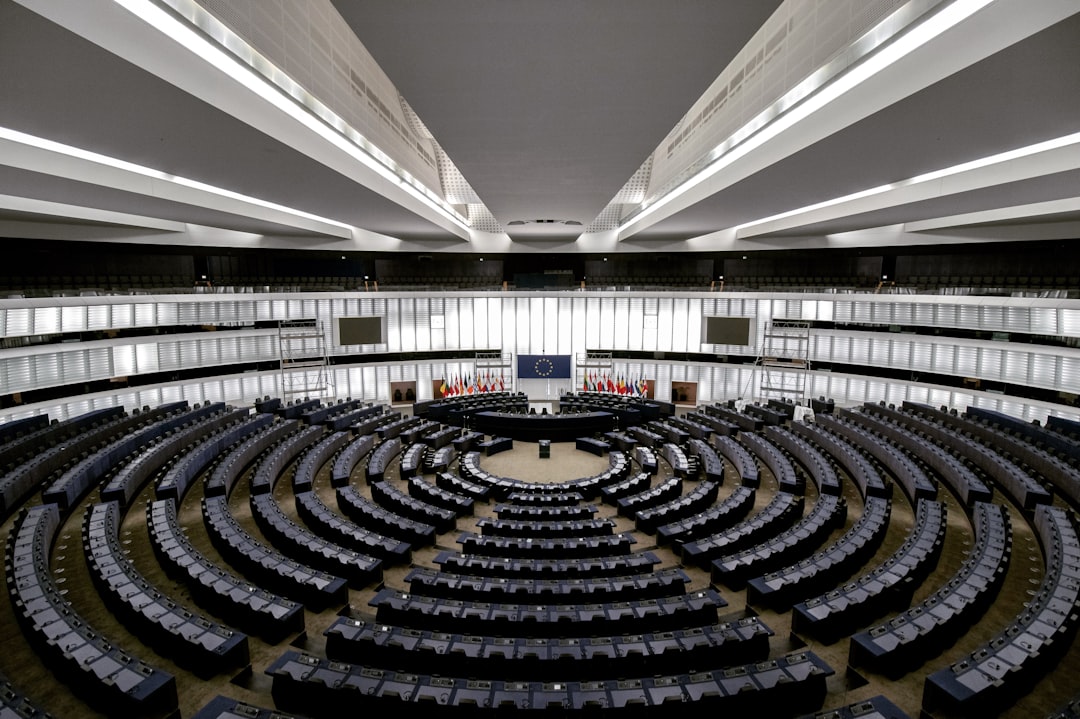
The European Parliament is scheduled to hold 15 plenary sessions in 2026. After the summer recess, the first session returns on 14 to 17 September, followed by sessions in October, November and December. When MEPs take their seats in Strasbourg in mid-September, they do not arrive at a blank canvas. They arrive at a prepared stage, with the Commission’s autumn programme already structured and the Council’s priorities already framed by months of quiet diplomatic work.
Parliament’s final plenary session before the summer recess sees members discuss the priorities of the Irish EU Council Presidency alongside key decisions on enlargement, foreign affairs, agriculture, competitiveness, environmental matters and the EU budget. Ireland holds the rotating presidency of the Council of the EU until the end of 2026. The presidency’s thematic choices in summer shape which files receive priority attention when the formal calendar restarts.






This dynamic reflects something deep in European political culture. The great diplomatic traditions of Europe, from the Congress of Vienna to the Treaty of Rome, were built through preparation, patience, and private alignment before public declaration. The EU’s late-summer calendar is a modern expression of that same civilisational instinct.

Why this matters for Europe’s citizens
EU diplomacy does not respect the calendar of school holidays or summer retreats. The institutional machinery continues to turn, and the positions established in the quiet months carry real consequences for citizens across all 27 member states. A housing directive shaped in September will determine whether a young architect in Lisbon or a family in Vilnius can afford to live near their work. A labour mobility package agreed in autumn will define how freely a Slovenian nurse or a Polish engineer can build a life across borders.
A unified tone in diplomatic gatherings does not erase persistent disagreements among member states on defence spending, industrial policy, or the pace of enlargement. These tensions do not disappear in summer. They simply move to smaller rooms and quieter conversations. Engaged citizens, journalists and civil society organisations serve Europe best when they follow EU diplomacy through all seasons, not only when the chamber lights come on in Strasbourg or the European Council convenes in October.
Conclusion: the value of watching the quiet season
EU diplomacy earns its deepest significance not in the grand ceremonial moments, but in the patient, structured work of preparation that precedes them. Just as the great cathedrals of Europe required years of unseen labour before their spires became visible against the sky, the EU’s autumn legislative programme requires weeks of unseen effort before it takes shape in public debate. Citizens who understand this rhythm understand Europe itself better. Follow EU diplomacy through August and early September, and you will arrive in autumn already knowing the map. Follow it through the formal calendar alone, and you will always be reading a story that began without you.
Discover more about EU diplomacy
- European External Action Service: EU Ambassadors’ Conference 2026
- European Parliament: Official Plenary Calendar 2026
- EUNews: Commission Autumn Agenda Seminar, September 2026