

CONTACT
  • Login
  • Register
Upgrade
EUwebzine
Advertisement
  • Home
    • Our Authors
    • Media Kit
    • Terms and Conditions
    • Cookie Policy
    • Contact
  • Business
  • Culture
  • Gastronomy
  • Travel
  • Sustainable living
  • Insights
    • News
    • Beauty
    • Kids
    • Well-being
    • Creativity
    • Sports
  • Global Europe
  • Local Guide
    • Activities in Europe
    • Hotels in Europe
    • Nightlife in Europe
    • Restaurants in Europe
    • Services in Europe
    • Shopping in Europe
  • Home
    • Our Authors
    • Media Kit
    • Terms and Conditions
    • Cookie Policy
    • Contact
  • Business
  • Culture
  • Gastronomy
  • Travel
  • Sustainable living
  • Insights
    • News
    • Beauty
    • Kids
    • Well-being
    • Creativity
    • Sports
  • Global Europe
  • Local Guide
    • Activities in Europe
    • Hotels in Europe
    • Nightlife in Europe
    • Restaurants in Europe
    • Services in Europe
    • Shopping in Europe
No Result
View All Result
EUwebzine
No Result
View All Result
Home Sustainable living

Textile recycling certifications explained

The certifications that turn your clothing choices into real circular economy action across Europe.

A woman examining a garment label in a clothing store to verify textile recycling certification marks

Textile recycling certifications are becoming the backbone of Europe’s push to turn worn-out clothes into new ones, and knowing which labels to trust is now a practical skill every wardrobe decision depends on.

Why certifications matter in a circular textile economy

Unlike downcycling or waste-to-energy methods, textile-to-textile recycling retains material quality, which enables the production of new garments from existing ones. The ultimate goal is a closed-loop system that minimizes waste and reduces dependency on virgin resources. That goal only works when you can verify the claim.
Certifications like GRS and RCS have become essential tools for companies seeking to demonstrate their commitment to sustainability. For consumers, these labels translate directly into trust. A certified garment gives you a documented chain of evidence, not a marketing promise.

Currently, only 1% of material in clothing is recycled into new clothing. That number shows exactly how much room exists for certified textile recycling to grow. Europe is building the infrastructure to change that ratio, and certifications are the measurement system that makes progress visible.

Understanding the Global Recycled Standard and Recycled Claim Standard

GRS and RCS were developed by Textile Exchange, a global non-profit driving positive impact on climate change across the fashion and textile industry. Both are international, voluntary standards that set requirements for third-party certification of recycled input, with a robust chain of custody from the source to the final product.

GRS requires a 20% minimum recycled content percentage plus additional social and environmental requirements related to processing and chemical use, whereas RCS requires at least 5% of recycled input with no processing requirements. In practical terms, GRS is the stronger standard. It is widely recognized and demanded by European companies to verify supply chain sustainability.

GRS requires that every stage of the supply chain, from the recycling phase to the final business-to-business transaction, must be certified to ensure integrity and traceability. Certified enterprises must also comply with GRS standards regarding wages, employment conditions, health and safety, and labor standards. Additionally, enterprises must establish an environmental management system and meet GRS standards for energy use and waste management.

What the Cradle to Cradle standard adds to textile recycling

Cradle to Cradle is a circular approach to a continuous and consistent recycling management system. All products are chemically harmless and recyclable. Waste generated according to the old take-make-waste model no longer exists under this framework, only useful nutrients.

Where GRS and RCS focus on verifying recycled content, Cradle to Cradle certification assesses product design for circularity at the start of the production process. It scores products across 5 categories: material health, material reutilization, renewable energy use, water stewardship, and social fairness. This makes it particularly relevant for brands that want certification to influence how they design, not only how they report.

For a conscious wardrobe, a garment with Cradle to Cradle certification signals that the entire product was built with its next life in mind. That is a qualitatively different promise from a recycled content claim alone.


-

EU Ecolabel certification mark on a wooden desk in a furniture showroom, choosing verified workspace furniture.

EU Ecolabel furniture for your workspace

04/09/2026
A woman closely examining an organic textile certification label on a garment in a retail store

Organic textile certifications explained

03/09/2026
A woman carefully reading the EU Ecolabel flower logo on a cleaning product in a European supermarket aisle

EU Ecolabel home routine that cuts waste

26/08/2026
A woman reviews garments at an EU circular fashion sample sale, looking for certified-organic pieces at reduced prices.

Sample sales: circular fashion deals in the EU

10/08/2026
A woman reading an EU Ecolabel certification mark on a cleaning product in a supermarket aisle.

EU Ecolabel: a household guide

02/08/2026
A woman carefully reading the packaging of an EU Ecolabel certified household cleaning product in a supermarket aisle.

EU Ecolabel products: choose with confidence

24/07/2026

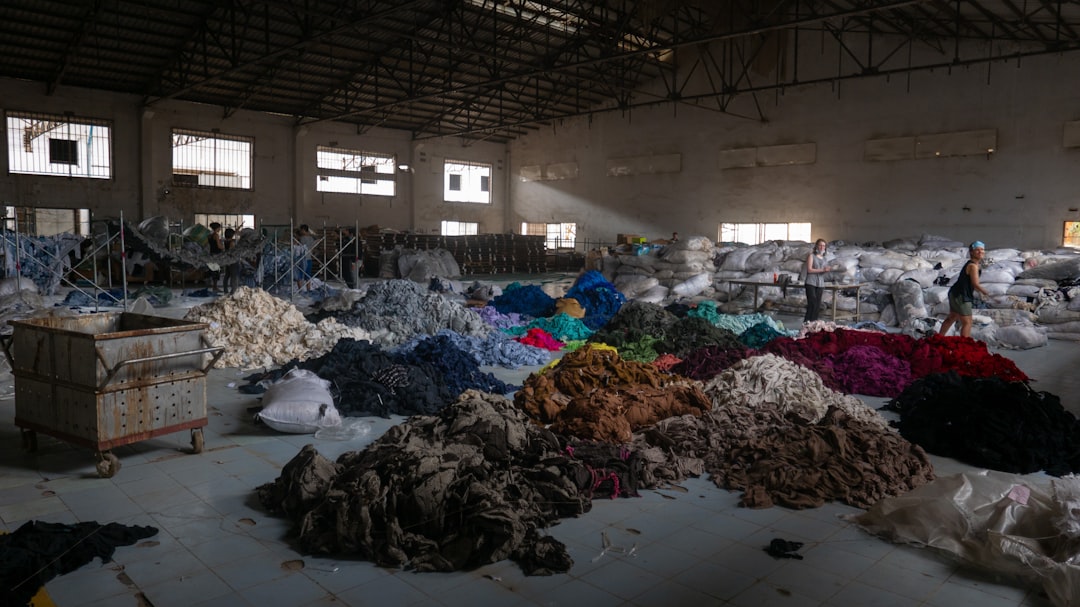
A textile worker sorting fabrics at a recycling facility that operates under certified textile recycling standards

Expert perspective on certification and traceability

Certifications like GRS and RCS are not just marketing tools. They are traceability instruments embedded in supply chain documentation. When a buyer asks for a Transaction Certificate, they are requesting evidence that every link in the recycling chain has been independently audited. Without that document chain, recycled content claims remain unverifiable. The EU’s regulatory direction, through the Digital Product Passport and the Waste Framework Directive, is pushing the entire industry toward mandatory traceability. Voluntary certifications adopted now will position brands ahead of compliance deadlines. The companies that invest in verified standards today face significantly lower adaptation costs when regulation becomes binding.

Industry perspective, sustainability and standards professionals in the European textile sector

How EU regulation is tightening the link between standards and law

On 9 September 2025, the European Parliament gave its final approval to the revised Waste Framework Directive. Following its publication in the Official Journal on 26 September, the Directive officially entered into force 20 days later, on 17 October 2025.

Beyond the new binding food waste reduction targets, the Directive establishes extended producer responsibility (EPR) schemes for textiles, to be set up in all Member States within 30 months of entry into force. Producers of clothing, footwear, and household textiles will be responsible for covering the costs of collection, sorting, and recycling.

Under the new framework, textile and footwear producers will pay a fee per item placed on the market, with fees eco-modulated based on circularity and sustainability criteria. This means that a certified textile recycling claim is no longer only a consumer-facing asset. It directly affects what a brand pays into the EPR system. Certification becomes a financial instrument, not only a communication tool.
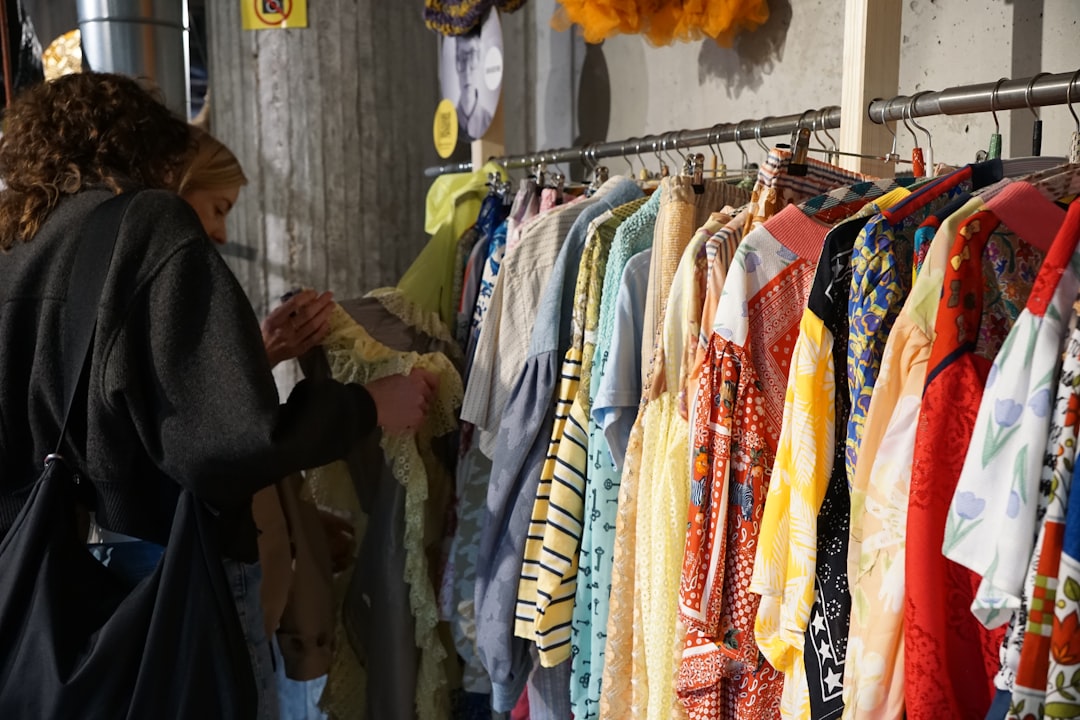
A person browsing a sustainable fashion rack and selecting items with verified textile recycling credentials

How to use certification labels when building a conscious wardrobe

Start with a simple rule: look for GRS first when you want the strongest recycled content guarantee. Choose RCS when you want a verified claim without the full social and environmental audit scope of GRS. Choose Cradle to Cradle when you want to support brands that design for circularity from the start.

The EU Strategy for Sustainable and Circular Textiles promotes the reduction of virgin material use and enhances resource efficiency. Certifications align directly with that strategy. Each purchase of a certified product supports the infrastructure that makes large-scale textile recycling economically viable.

Check product pages for downloadable Transaction Certificates or Scope Certificates. A brand that publishes these documents demonstrates that its certification is active and auditable. A brand that only displays a logo without documentation is providing a weaker guarantee.

Conclusion: certifications are the practical tool for textile recycling progress

Textile recycling certifications convert environmental intent into verifiable, auditable fact. GRS, RCS, and Cradle to Cradle each serve a distinct function in this system, and understanding those differences gives you real purchasing power. As EU regulation ties EPR fees and traceability requirements directly to certified performance, the economic logic of certification will only grow stronger. Choose textile recycling certifications with the same deliberateness you bring to any investment in your wardrobe, because that is exactly what they are.

Discover more about textile recycling

  • EU Strategy for Sustainable and Circular Textiles, European Commission
  • Recycled Claim Standard and Global Recycled Standard, Textile Exchange
  • EU Adopts New Textile EPR Requirements, Verdant Law Analysis

author avatar
Thomas van der Berg
Thomas van der Berg studied business and technology at the University of Amsterdam and has spent 15 years at the intersection of European innovation, sustainability, and entrepreneurship. From Amsterdam's thriving startup scene to the EU's green economy transition, he writes with the pragmatic clarity that Dutch culture is known for. His work connects business strategy with Europe's broader social and environmental agenda.
See Full Bio
Previous Post

EU diplomacy shapes autumn policy

Next Post

EU partnership agreement: a lean guide

Related Posts

EU Ecolabel certification mark on a wooden desk in a furniture showroom, choosing verified workspace furniture.
Sustainable living

EU Ecolabel furniture for your workspace

04/09/2026
A woman closely examining an organic textile certification label on a garment in a retail store
Sustainable living

Organic textile certifications explained

03/09/2026
A woman carefully reading the EU Ecolabel flower logo on a cleaning product in a European supermarket aisle
Sustainable living

EU Ecolabel home routine that cuts waste

26/08/2026
A woman reviews garments at an EU circular fashion sample sale, looking for certified-organic pieces at reduced prices.
Sustainable living

Sample sales: circular fashion deals in the EU

10/08/2026
A woman reading an EU Ecolabel certification mark on a cleaning product in a supermarket aisle.
Sustainable living

EU Ecolabel: a household guide

02/08/2026
Next Post
Two startup founders reviewing an EU partnership agreement document at a shared office desk

EU partnership agreement: a lean guide

Leave a Reply Cancel reply

Your email address will not be published. Required fields are marked *

Truelang, tranlation plugin Truelang, tranlation plugin Truelang, tranlation plugin
No Result
View All Result

Our Focus

EUwebzine is your international window on Europe: lifestyle, business, culture, sports and events for a global audience following the continent's evolving story.

Our Readers

EUwebzine addresses readers who engage with Europe at a high level: professionally, financially, strategically, and as decision-makers in their fields.

Our Approach

Lifestyle, policy, and culture are integrated as context and indicators of economic cohesion, political direction, and Europe's role on the global stage, not standalone entertainment.

Recent Post

  • State aid rules for EU startups
  • Forest bathing programmes in Europe

© 2026 EUwebzine by NOOR & NOOR — part of WEBZINE.world.

Welcome Back!

Login to your account below

Forgotten Password? Sign Up

Create New Account!

Fill the forms bellow to register

All fields are required. Log In

Retrieve your password

Please enter your username or email address to reset your password.

Log In
Manage Consent
To provide the best experiences, we use technologies like cookies to store and/or access device information. Consenting to these technologies will allow us to process data such as browsing behavior or unique IDs on this site. Not consenting or withdrawing consent, may adversely affect certain features and functions.
Functional Always active
The technical storage or access is strictly necessary for the legitimate purpose of enabling the use of a specific service explicitly requested by the subscriber or user, or for the sole purpose of carrying out the transmission of a communication over an electronic communications network.
Preferences
The technical storage or access is necessary for the legitimate purpose of storing preferences that are not requested by the subscriber or user.
Statistics
The technical storage or access that is used exclusively for statistical purposes. The technical storage or access that is used exclusively for anonymous statistical purposes. Without a subpoena, voluntary compliance on the part of your Internet Service Provider, or additional records from a third party, information stored or retrieved for this purpose alone cannot usually be used to identify you.
Marketing
The technical storage or access is required to create user profiles to send advertising, or to track the user on a website or across several websites for similar marketing purposes.
  • Manage options
  • Manage services
  • Manage {vendor_count} vendors
  • Read more about these purposes
View preferences
  • {title}
  • {title}
  • {title}
No Result
View All Result
  • Home
    • Our Authors
    • Media Kit
    • Terms and Conditions
    • Cookie Policy
    • Contact
  • Business
  • Culture
  • Gastronomy
  • Travel
  • Sustainable living
  • Insights
    • News
    • Beauty
    • Kids
    • Well-being
    • Creativity
    • Sports
  • Global Europe
  • Local Guide
    • Activities in Europe
    • Hotels in Europe
    • Nightlife in Europe
    • Restaurants in Europe
    • Services in Europe
    • Shopping in Europe

© 2026 EUwebzine by NOOR & NOOR — part of WEBZINE.world.

Not enough quota to unlock this post
Unlock left : 0
Are you sure want to cancel subscription?
Verified by MonsterInsights
enEnglishdeDeutschesEspañolfrFrançaisnlNederlands