

CONTACT
  • Login
  • Register
Upgrade
EUwebzine
Advertisement
  • Home
    • Our Authors
    • Media Kit
    • Terms and Conditions
    • Cookie Policy
    • Contact
  • Business
  • Culture
  • Gastronomy
  • Travel
  • Sustainable living
  • Insights
    • News
    • Beauty
    • Kids
    • Well-being
    • Creativity
    • Sports
  • Global Europe
  • Local Guide
    • Activities in Europe
    • Hotels in Europe
    • Nightlife in Europe
    • Restaurants in Europe
    • Services in Europe
    • Shopping in Europe
  • Home
    • Our Authors
    • Media Kit
    • Terms and Conditions
    • Cookie Policy
    • Contact
  • Business
  • Culture
  • Gastronomy
  • Travel
  • Sustainable living
  • Insights
    • News
    • Beauty
    • Kids
    • Well-being
    • Creativity
    • Sports
  • Global Europe
  • Local Guide
    • Activities in Europe
    • Hotels in Europe
    • Nightlife in Europe
    • Restaurants in Europe
    • Services in Europe
    • Shopping in Europe
No Result
View All Result
EUwebzine
No Result
View All Result
Home Beauty

SPF labelling rules that protect your skin

How the EU's strict SPF labelling framework makes European sunscreens the gold standard for genuine skin protection.

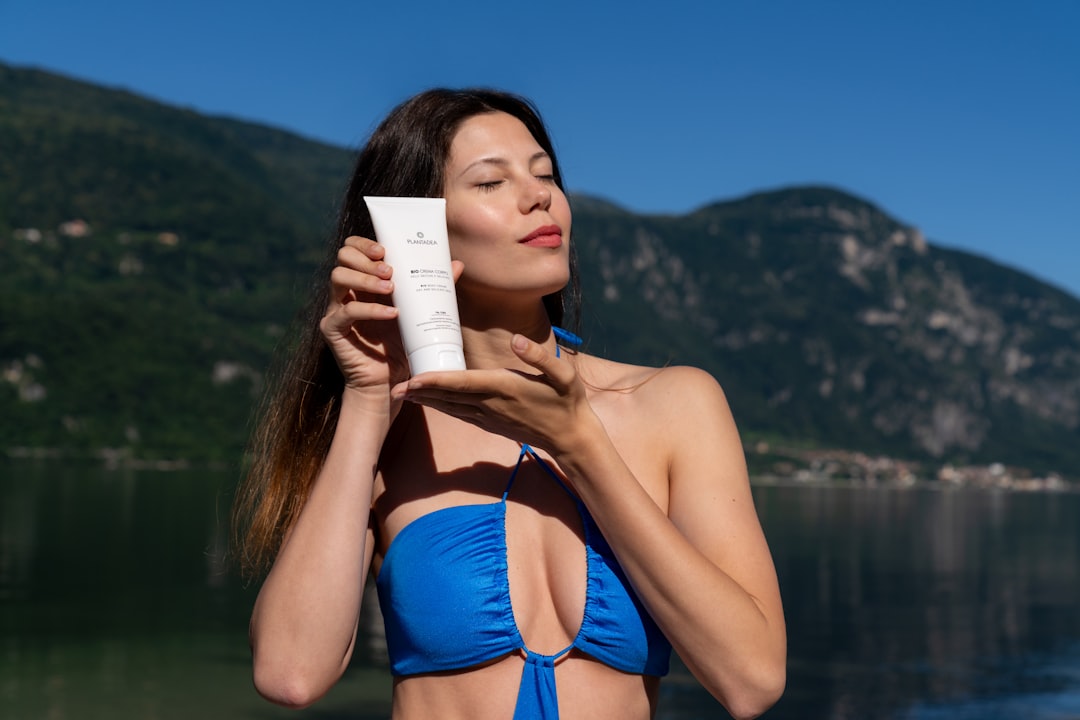
A woman carefully applying SPF labelling sunscreen on her skin at the beach, reading the label before use.

SPF labelling in the European Union holds a standard that most of the world has not yet reached, and for anyone who takes sun protection seriously, that distinction matters deeply.

Why the EU treats sunscreen differently

Unlike other regions, sunscreen products in the European Union are classified as cosmetic products. This classification matters because it places every product under strict requirements on safety, efficacy, labelling, and claims under Regulation (EC) No. 1223/2009. The result is a market where protection is not a promise but a provable standard.

Sunscreen labelling carries a public health dimension. Inaccurate or misleading sun protection claims can lead consumers to underestimate their UV exposure, with serious consequences. This is precisely why the European Commission issued a dedicated Recommendation for sunscreens, and why national authorities treat non-compliant sunscreen labels with particular seriousness.

The European Commission established recommendations that define the minimum efficacy sunscreen products must achieve before being marketed in the EU. These recommendations focus on 3 main elements related to protection against UV radiation. Every product must meet these thresholds before a single bottle reaches a shelf.

What SPF labelling actually requires in Europe

The effectiveness of sunscreen products must be indicated on the label using categories such as “low,” “medium,” “high,” and “very high,” along with the SPF value. This system gives consumers a clear and immediate point of reference. Furthermore, SPF values map to those 4 label categories, and a brand may never round an SPF up into a higher category.

A sunscreen product must have a Sun Protection Factor of at least 6. Products with an SPF below 6 cannot be classified as sunscreen products. The UVA protection factor must be at least one third of the SPF value indicated on the label. In practice, a product meeting this UVA threshold, along with a critical wavelength of at least 370 nm, may display the UVA-in-a-circle logo and be described as offering balanced, broad-spectrum protection.

Additionally, the European Commission requests that claims do not imply 100% protection from UV radiation, with terms such as “sunblock,” “sunblocker,” or “total protection” being prohibited, along with claims suggesting no need to reapply the product under any circumstances. This approach protects the consumer from false confidence. It is a form of structural honesty built directly into the law.

How testing makes SPF labelling trustworthy

Sunscreens must undergo an SPF test to determine their Sun Protection Factor. The SPF is calculated through in-vivo testing by dividing the time it takes for sunscreen-covered skin to burn by the time it takes for bare skin to burn. This method leaves little room for exaggeration.

Every SPF, UVA, and water-resistance claim must be substantiated and held in the product’s safety dossier before sale under Regulation (EC) No 1223/2009. Brands cannot simply assert a number. The regulation requires that any claim made for a product is supported by adequate and verifiable evidence, and an SPF is one of the most heavily scrutinised claims a cosmetic can carry.

In December 2024, the International Organization for Standardization introduced 2 new methods for assessing the Sun Protection Factor of cosmetic products. These include the ISO 23675 “double plate” standard, a fully in-vitro method, and the ISO 23698 hybrid method, which combines both in-vitro and in-vivo measurements to determine the SPF as well as the UVA protection factor and the critical wavelength. The EU framework continues to evolve toward greater precision and scientific rigour.


-

A woman carefully examines a product label in a pharmacy, reflecting the transparency promised by EU cosmetic standards.

EU cosmetic standards: why they matter

25/07/2026
A woman carefully applying a serum containing EU skincare ingredients in a minimalist bathroom setting

EU skincare ingredients your routine needs

13/07/2026
Two young European women applying cold weather skincare moisturizer during winter morning routine with natural window lighting

Cold Weather Skincare: European Winter Guide

13/11/2025
Natural beauty makeup trends featuring minimal coverage and authentic skin texture for women

Autumn Makeup 2026: European Women’s Guide

05/11/2025

A dermatologist advising a patient on SPF labelling requirements and choosing the right European sunscreen.

Expert perspective on SPF labelling standards

The EU’s approach to SPF labelling is genuinely distinctive at the global level. The combination of mandatory category labelling, a hard minimum UVA-to-SPF ratio, and explicit prohibitions on absolute protection claims creates a framework that forces brands to be honest. Consumers who buy a product labelled “High” in Europe can trust that the label reflects a tested, verified outcome, not a marketing decision. The requirement to always label down, never up, is a small technical rule with enormous implications for public health. As regulatory attention now turns to environmental impact and ingredient restrictions, European consumers can expect transparency to extend well beyond the SPF number itself.

Industry perspective, sun care compliance and cosmetics regulatory professionals in Europe

The growing market behind the standard

Sunscreen is a key product in protecting human skin from the harmful effects of ultraviolet radiation, including sunburn, premature ageing, and skin cancer. In the European Union, these products represent a market valued at USD 2.53 billion in 2024, which is expected to grow by 7.3% annually through 2030, reflecting both increasing consumer awareness and rising demand for effective and reliable sun protection.

Rising incidence of skin cancer and coordinated public health interventions, integration of sunscreen into daily skincare and cosmetic routines, and strong consumer awareness of UV protection and preventive dermatology are among the primary growth drivers. European consumers are not simply buying beauty products. They are making informed, health-conscious decisions supported by a regulatory environment that rewards transparency.

Environmental claims must comply with Regulation 655/2013 and, in the near future, the European Directive 2024/825 against greenwashing, which will impose greater rigour in justifying claims such as “reef-safe” or “eco-friendly.” For the conscious consumer, this means that sustainability claims on European sunscreens will soon carry the same legal weight as SPF numbers themselves.

Conclusion: SPF labelling as a mark of European integrity

SPF labelling in the EU is not a formality. It is a framework designed to give every consumer genuine, testable information about the protection they are buying. European sunscreens earn their reputation through mandatory testing, honest category labels, and prohibited exaggerations. When you choose a product made and sold within the EU, you are choosing one shaped by some of the most demanding standards in the world. Look for the category label, the UVA circle, and the compliance with Regulation (EC) No. 1223/2009. These small marks on a bottle represent something meaningful: a commitment, written in law, to your skin’s health. In a crowded global market, SPF labelling done the European way remains a standard worth seeking out.

Discover more about SPF labelling

  • EU Sunscreen Labelling Requirements: What Brands Can and Cannot Claim
  • EU Sunscreen Regulation: UV Filters, SPF Testing and Compliance Explained
  • European Regulations for Sunscreen Products: Formulation, Claims and Sustainability

author avatar
Sophie Marchand
Sophie Marchand grew up in the 6th arrondissement of Paris, where culture, fashion, and gastronomy were simply part of daily life. She has spent 15 years writing about European luxury lifestyle, sustainable fashion, and the art of living well across the continent. Her work appears at the crossroads of heritage and contemporary European identity.
See Full Bio
Previous Post

Nature camps still open for August bookings

Next Post

Supplier contract tips for EU cross-border deals

Related Posts

A woman carefully examines a product label in a pharmacy, reflecting the transparency promised by EU cosmetic standards.
Beauty

EU cosmetic standards: why they matter

25/07/2026
A woman carefully applying a serum containing EU skincare ingredients in a minimalist bathroom setting
Beauty

EU skincare ingredients your routine needs

13/07/2026
Two young European women applying cold weather skincare moisturizer during winter morning routine with natural window lighting
Beauty

Cold Weather Skincare: European Winter Guide

13/11/2025
Natural beauty makeup trends featuring minimal coverage and authentic skin texture for women
Beauty

Autumn Makeup 2026: European Women’s Guide

05/11/2025
Next Post
Two professionals reviewing a cross-border EU supplier contract at a modern office desk, discussing key clauses.

Supplier contract tips for EU cross-border deals

Leave a Reply Cancel reply

Your email address will not be published. Required fields are marked *

Truelang, tranlation plugin Truelang, tranlation plugin Truelang, tranlation plugin
No Result
View All Result

Our Focus

EUwebzine is your international window on Europe: lifestyle, business, culture, sports and events for a global audience following the continent's evolving story.

Our Readers

EUwebzine addresses readers who engage with Europe at a high level: professionally, financially, strategically, and as decision-makers in their fields.

Our Approach

Lifestyle, policy, and culture are integrated as context and indicators of economic cohesion, political direction, and Europe's role on the global stage, not standalone entertainment.

Recent Post

  • State aid rules for EU startups
  • Forest bathing programmes in Europe

© 2026 EUwebzine by NOOR & NOOR — part of WEBZINE.world.

Welcome Back!

Login to your account below

Forgotten Password? Sign Up

Create New Account!

Fill the forms bellow to register

All fields are required. Log In

Retrieve your password

Please enter your username or email address to reset your password.

Log In
Manage Consent
To provide the best experiences, we use technologies like cookies to store and/or access device information. Consenting to these technologies will allow us to process data such as browsing behavior or unique IDs on this site. Not consenting or withdrawing consent, may adversely affect certain features and functions.
Functional Always active
The technical storage or access is strictly necessary for the legitimate purpose of enabling the use of a specific service explicitly requested by the subscriber or user, or for the sole purpose of carrying out the transmission of a communication over an electronic communications network.
Preferences
The technical storage or access is necessary for the legitimate purpose of storing preferences that are not requested by the subscriber or user.
Statistics
The technical storage or access that is used exclusively for statistical purposes. The technical storage or access that is used exclusively for anonymous statistical purposes. Without a subpoena, voluntary compliance on the part of your Internet Service Provider, or additional records from a third party, information stored or retrieved for this purpose alone cannot usually be used to identify you.
Marketing
The technical storage or access is required to create user profiles to send advertising, or to track the user on a website or across several websites for similar marketing purposes.
  • Manage options
  • Manage services
  • Manage {vendor_count} vendors
  • Read more about these purposes
View preferences
  • {title}
  • {title}
  • {title}
No Result
View All Result
  • Home
    • Our Authors
    • Media Kit
    • Terms and Conditions
    • Cookie Policy
    • Contact
  • Business
  • Culture
  • Gastronomy
  • Travel
  • Sustainable living
  • Insights
    • News
    • Beauty
    • Kids
    • Well-being
    • Creativity
    • Sports
  • Global Europe
  • Local Guide
    • Activities in Europe
    • Hotels in Europe
    • Nightlife in Europe
    • Restaurants in Europe
    • Services in Europe
    • Shopping in Europe

© 2026 EUwebzine by NOOR & NOOR — part of WEBZINE.world.

Not enough quota to unlock this post
Unlock left : 0
Are you sure want to cancel subscription?
Verified by MonsterInsights
enEnglishdeDeutschesEspañolfrFrançaisnlNederlands