


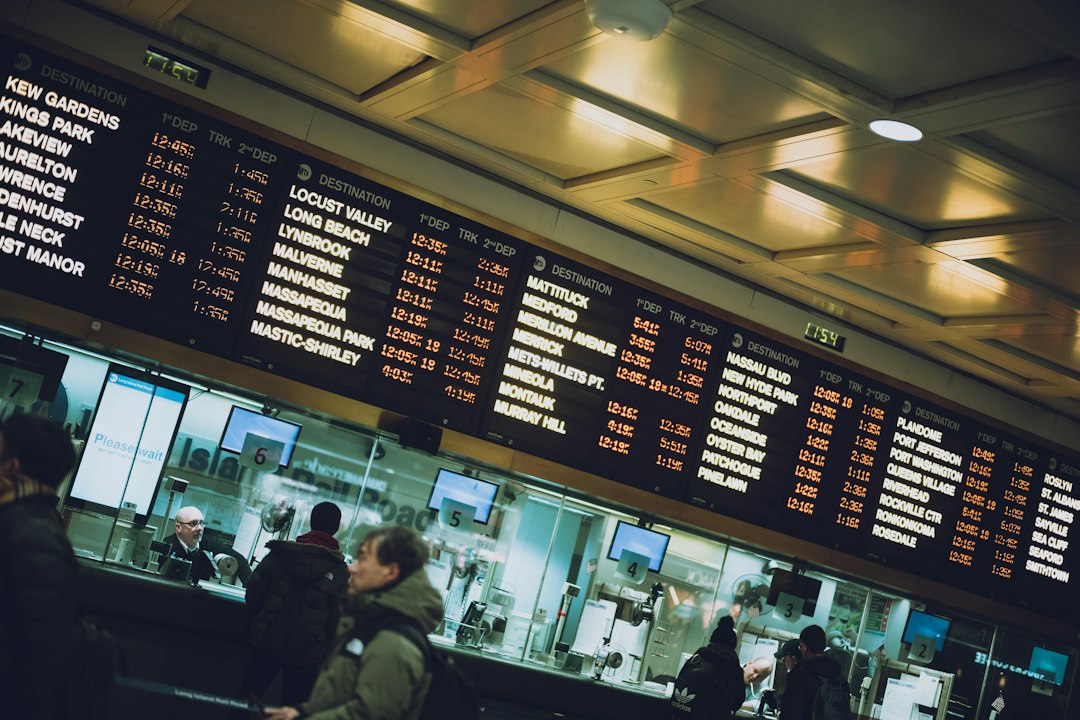
Your flight to Lisbon has just been cancelled, and the departure board offers no explanation. Flight compensation under EU Regulation 261/2004 can reach €600 per passenger, paid on top of any refund or rerouting you also receive. The rule applies whether you flew from Rome on a budget carrier or from Paris on a legacy airline. This guide walks through the distance bands, the exceptions airlines rely on, and the exact sequence to follow before you give up on a claim.
What EU261 covers, and what counts as a cancellation
The regulation protects passengers on any flight departing from an EU airport, no matter which airline operates it, and on flights arriving in the EU when an EU carrier runs the route. EU261 generally covers departures from the EU on any airline and arrivals from outside the EU on an EU airline. Four situations trigger your right to compensation. These are a delay of 3 or more hours at the final destination, a cancellation announced with less than 14 days' notice, overbooking, and a missed connection on a single booking.
If none of those apply, you may still be owed a refund or rerouting, just not the fixed cash sum. Knowing which box your disruption fits is the first step toward the right amount.

How much flight compensation you can claim
The payout depends only on distance, never on what you paid for the seat. Routes of 1,500 kilometres or less earn €250, intra-EU flights over 1,500 kilometres and other journeys between 1,500 and 3,500 kilometres earn €400, and anything beyond 3,500 kilometres reaches €600. Under EU regulation 261/2004 you may be entitled to fixed compensation of €250, €400 or €600 based on the flight distance, regardless of what you paid for the ticket. A discount fare and a full-price business ticket on the same disrupted route collect the identical sum, because the rule tracks kilometres, not cost. Children get the same amount as adults, with no discount. One exception softens this: the amounts can be halved if the rerouting following a cancellation arrives within a specified time window.
A change is coming, but it will not affect claims you file today. On 15 June 2026 the European Parliament and the Council of the EU reached a political agreement on revising the regulation, the first breakthrough after more than 13 years of debate. The current rules still apply, and the new text keeps the 3-hour threshold and the €250/€400/€600 amounts. Until the reform is formally adopted, treat every figure above as binding today.
When airlines can legally refuse your claim
Carriers lean on one defence above all others. EU261 describes an extraordinary circumstance as an event which could not have been avoided even if all reasonable measures had been taken. Weather is the clearest case: storm, dense fog, or a volcanic eruption like the Icelandic volcano Eyjafjallajökull in 2010 are beyond the airline's control. Strikes can also qualify, but only certain ones. Strikes by third parties who are not under the airline's employment or contractual authority can qualify, including strikes by air traffic controllers, airport security staff, and fueling crews not directly employed by the airline. Bird strikes count too, since a bird strike is considered an extraordinary circumstance.
Plenty of excuses fail the test, and courts have said so directly. Technical faults inside normal aircraft operation do not qualify: in Van der Lans v KLM, the Court held that technical problems are not considered extraordinary circumstances, so airlines remain liable to pay compensation. The same logic applies to labour disputes started by the airline's own workforce. The ECJ ruled in 2018 that a wildcat strike by Ryanair pilots, in the Krüsemann case, was not an extraordinary circumstance, since it was within the airline's control. The burden never sits with you: airlines must prove circumstances were truly extraordinary.
Your rights to care, refund and rerouting while you wait
Even when the airline wins the extraordinary circumstances argument, it does not escape every duty. Extraordinary circumstances do not remove the airline's duty to provide care and assistance, such as meals, accommodation and re-routing; they only affect the payment of monetary compensation. A long enough delay also lets you walk away entirely. If your flight is delayed by more than 5 hours, you can choose to cancel your journey entirely and receive a full refund of the ticket price, applying to all flights departing from an EU airport or operated by an EU airline. None of these entitlements cancel each other out. EU261 compensation is paid on top of, not instead of, any other entitlement the passenger has.
One future change is worth watching rather than acting on yet. After a cancellation, airlines may soon have to offer rerouting on the earliest available flight on any carrier, not just their own network. That obligation is not law today, so keep your claim focused on the rules currently in force.

How to file your claim step by step
Start in writing, directly with the airline. Name Regulation (EC) No 261/2004, give your booking reference, and attach the boarding pass or the cancellation notice shown at the gate. The Commission recommends that the air carrier reply within 2 months, without imposing restrictions on which official EU language you use.
If the airline stays silent or rejects a claim that fits the rules above, escalate to the national enforcement body. Complaints go to the national enforcement body of the country of departure for EU flights and flights from the EU to a non-EU country, and to the national enforcement body of the country of arrival for flights from outside the EU. You do not need a lawyer for this step. A European Consumer Centre supported by the European Commission exists in every EU country as well as in Iceland and Norway, and can guide you through a cross-border case at no cost.
Some member states also offer a low-cost court route when the enforcement body stalls. In Ireland, if the National Enforcement Body refuses to compel the airline to comply and the European Consumer Centre cannot assist, passengers may bring proceedings through the Small Claims Court provided the amount claimed is less than 2,000 euros. Check your own country's consumer authority for an equivalent option before assuming court is out of reach.
What to do first, and what can wait
Act within days of the disruption, not months. Write to the airline immediately, naming the regulation, your booking reference and the distance band that sets your amount, since this letter starts the two-month clock the Commission recommends airlines respect. The national enforcement body step can wait until that window closes or the airline replies with a refusal you disagree with. The 2026 reform can wait entirely: it changes nothing about the claim you are filing today.