
CONTACT
  • Login
  • Register
Upgrade
EUwebzine
Advertisement
  • Home
    • Our Authors
    • Media Kit
    • Terms and Conditions
    • Cookie Policy
    • Contact
  • News
  • Business
  • Lifestyle
    • Beauty
    • Kids
    • Sustainable living
    • Well-being
    • Sports
    • Creativity
  • Culture
  • Gastronomy
  • Travel
  • Global Europe
  • Insights
  • Local Guide
    • Activities in Europe
    • Hotels in Europe
    • Nightlife in Europe
    • Restaurants in Europe
    • Services in Europe
    • Shopping in Europe
  • Home
    • Our Authors
    • Media Kit
    • Terms and Conditions
    • Cookie Policy
    • Contact
  • News
  • Business
  • Lifestyle
    • Beauty
    • Kids
    • Sustainable living
    • Well-being
    • Sports
    • Creativity
  • Culture
  • Gastronomy
  • Travel
  • Global Europe
  • Insights
  • Local Guide
    • Activities in Europe
    • Hotels in Europe
    • Nightlife in Europe
    • Restaurants in Europe
    • Services in Europe
    • Shopping in Europe
No Result
View All Result
EUwebzine
No Result
View All Result
Home Luxury Lifestyle Gastronomy

Farmers markets to eat like a local in the EU

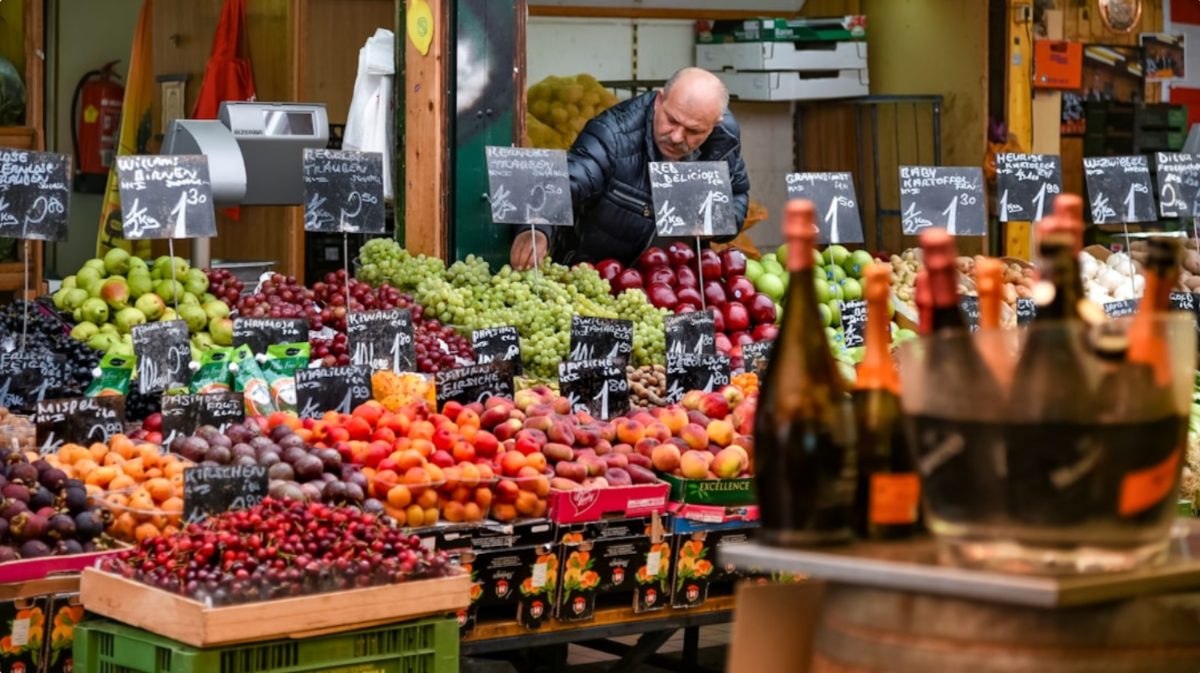
From Provence to Poznań, these 7 EU summer farmers markets reveal the finest flavours of European life.

A woman selecting fresh seasonal vegetables at an EU summer farmers market in a sunlit town square.

Farmers markets are the most honest expression of a place: a square, a season, and the people who feed a city, laid open under the summer sky.

Where tradition and terroir come alive

Every summer, the European Union blooms into a constellation of open-air markets. These are not simply places to buy tomatoes or honey. They are seasonal rituals, centuries old, where artisan producers and curious visitors meet on equal ground. From the lavender-scented lanes of southern France to the cobblestone squares of central Poland, each market tells a specific story about soil, climate, and community.

The act of buying directly from a grower carries a quiet power. Producers retain a greater share of the final price, and consumers receive fresh, traceable food connected to a known landscape. This short food chain is also more sustainable: less packaging, less transport, and less energy than the supermarket model. For the conscious traveller, a local farmers market is the most elegant detour possible.

Summer is the ideal season to explore them. Stalls overflow with stone fruit, young cheeses, cured meats, and freshly baked breads. The pace is slow, the conversations are generous, and the flavours are extraordinary.

7 EU farmers markets worth travelling for

1. Münstermarkt, Freiburg im Breisgau, Germany This market surrounds the Gothic cathedral of Freiburg every Tuesday, Thursday, and Saturday. Sellers here are multi-generational: some families have worked the regional fields since the mid-19th century. Visitors find Lange Rote sausages, regional wines, seasonal berries, and forest mushrooms. Arrive early, before the stalls thin out, and treat it as the finest open-air breakfast in Germany.

2. Marché Cours Saleya, Nice, France Along the seafront of the old town, this daily market is one of the most beautiful in France. In summer, the stalls carry socca, fresh basil by the armful, ripe figs, and small rounds of chèvre. The colours alone justify the visit. Florists and spice merchants share space with organic vegetable growers from the surrounding hills of the Alpes-Maritimes. This is Provençal life at its most direct.

3. Mercado Central, Valencia, Spain Situated inside a modernist landmark, the Mercado Central in Valencia is one of the largest and most beautiful covered markets in Europe. Its wrought-iron structure and ceramic details make it a work of architecture as much as a place of commerce. In summer, stalls carry tiger nuts for horchata, fresh seafood, and the precise varieties of rice that make authentic paella possible. Shopping here feels like a masterclass in regional identity.

4. Haagse Markt, The Hague, Netherlands The Haagse Markt is the largest outdoor farmers market in Europe. Held on Mondays, Wednesdays, and Saturdays in the Loosduinseweg district, it draws an extraordinarily diverse range of local and artisan producers. The scale is vast, but the atmosphere remains neighbourhood-level: stalls sell Dutch stroopwafels, heritage cheeses, seasonal vegetables, and freshly cut flowers at prices that reflect real supply rather than tourist expectation. It is a market where The Hague actually shops.

5. Nafplio Farmers Market, Nafplio, Greece Every Wednesday along 25is Martiou street, the town of Nafplio hosts a sun-filled outdoor market approximately 2 hours from Athens. Mounds of strawberries, oranges, olives, and fresh herbs cover the stalls, all at prices that reflect direct seasonal production. The setting, with a Venetian fortress visible above the town, gives this market an atmosphere that no urban food hall can replicate. It is one of the most authentic seasonal experiences in the Greek Peloponnese.

6. Rynek Glówny Market, Kraków, Poland The grand central square of Kraków hosts a rotating calendar of artisan and produce markets through the summer months. Local vendors bring oscypek (smoked sheep’s cheese from the Tatra mountains), regional honey, dried mushrooms, and handmade ceramics. The market sits inside a UNESCO World Heritage Site, which lends every transaction a remarkable sense of continuity. History and flavour share the same address.

7. Green Market (Grüner Markt), Nienburg, Germany In 2008, this weekly market received the distinction of most beautiful farmers market in Europe from the non-profit foundation Lebendige Stadt. Located within the historical old town of Nienburg in the Weser region, it limits its produce strictly to fruit, horticulture, fishing, and raw natural products. In summer, the stalls present flowers, soft fruits, artisan cheeses, and baked goods with a visual care that reflects genuine producer pride. It is a small market, but its quality is remarkable.

An expert perspective on seasonal food culture

Farmers markets across the EU do far more than connect producers with consumers. They act as living archives of regional food knowledge. When you visit a summer market in Provence or the Peloponnese, you encounter varieties of fruit, cheese-making traditions, and cultivation methods that exist nowhere else. These markets preserve biodiversity, both agricultural and cultural. They also create a transparent food system: the producer is present, the origin is visible, and the relationship between land and table is clear. For the modern traveller who values authenticity, a well-chosen farmers market offers something that no restaurant menu can fully replicate. It is the food before the food, the ingredient before the transformation.

Industry perspective, sustainable food and gastronomy professionals in Europe

An artisan vendor presenting local cheeses at a traditional EU farmers market stall.

-

A woman carefully reading allergen free product labels at a vibrant European summer festival market stall

Allergen free eating at EU summer festivals

26/07/2026
A woman enjoying dinner at one of the most elegant rooftop restaurants in Paris, with the city skyline glowing at sunset

Rooftop restaurants for a July evening

22/07/2026
A sommelier guides a guest through a private tasting inside a historic EU vineyard cellar in Burgundy, France

EU vineyard experiences to book now

14/07/2026
A woman carefully reading the label on certified gluten-free pasta in a European supermarket aisle

Gluten-free pasta brands to order in Europe

10/07/2026
A woman tasting Parmigiano Reggiano in a traditional Italian caseificio, a celebrated EU geographical indication food.

EU geographical indication foods worth the try

22/06/2026
A woman carefully reading allergen labels on a packaged gluten-free product in a European supermarket aisle

Allergen labels for gluten-free eating

13/06/2026

Why these markets matter beyond the plate

Farmers markets carry a significance that extends well beyond personal pleasure. The European Commission has consistently recognised local and short food supply chains as tools for environmental sustainability. Products sold through these direct channels require less packaging, less storage energy, and shorter transport routes. The artisan producer benefits economically, and the surrounding community retains a living food culture.

These 7 markets each demonstrate something specific: that the EU’s gastronomic identity is not located in any single capital or restaurant. It is distributed across hundreds of squares and streets, renewed each summer by the same seasonal logic that has governed European food for centuries.


As sustainable travel becomes a defining value for discerning visitors, the farmers market emerges as the most considered choice. It is slow, local, and profoundly connected to place.

Choose your market, choose your Europe

Farmers markets invite you to participate in European food culture, not merely observe it. Each of these 7 EU destinations offers a distinct seasonal experience: a different ingredient, a different tradition, a different conversation with the person who grew what you are holding. Visit one farmers market this summer. Let the produce guide your journey. You will return knowing a place in a way that no hotel lobby or guided tour can offer. Europe reveals itself most honestly at the morning stall, under a canvas awning, in the middle of an ordinary square.

A couple exploring fresh fruit and artisan goods at a vibrant EU farmers market on a summer morning.

Discover more about farmers markets

  • EU agriculture and rural development: short food supply chains and local food systems
  • World Farmers Markets Coalition: global network and best practices
  • How to Eat Like a Local in Europe: A Guide to Farmers Markets and Food Culture

author avatar
Sophie Marchand
Sophie Marchand grew up in the 6th arrondissement of Paris, where culture, fashion, and gastronomy were simply part of daily life. She has spent 15 years writing about European luxury lifestyle, sustainable fashion, and the art of living well across the continent. Her work appears at the crossroads of heritage and contemporary European identity.
See Full Bio
Previous Post

Cohesion funds: which EU regions benefit most

Next Post

Carbon footprint tips for European travel

Related Posts

A woman carefully reading allergen free product labels at a vibrant European summer festival market stall
Gastronomy

Allergen free eating at EU summer festivals

26/07/2026
A woman enjoying dinner at one of the most elegant rooftop restaurants in Paris, with the city skyline glowing at sunset
Gastronomy

Rooftop restaurants for a July evening

22/07/2026
A sommelier guides a guest through a private tasting inside a historic EU vineyard cellar in Burgundy, France
Gastronomy

EU vineyard experiences to book now

14/07/2026
A woman carefully reading the label on certified gluten-free pasta in a European supermarket aisle
Gastronomy

Gluten-free pasta brands to order in Europe

10/07/2026
A woman tasting Parmigiano Reggiano in a traditional Italian caseificio, a celebrated EU geographical indication food.
Gastronomy

EU geographical indication foods worth the try

22/06/2026
Next Post
A woman boarding a European train, choosing rail travel to reduce her carbon footprint on a summer holiday

Carbon footprint tips for European travel

Leave a Reply Cancel reply

Your email address will not be published. Required fields are marked *

Truelang, tranlation plugin Truelang, tranlation plugin Truelang, tranlation plugin
No Result
View All Result

Our Focus

EUwebzine is your international window on Europe: lifestyle, business, culture, sports and events for a global audience following the continent's evolving story.

Our Readers

EUwebzine addresses readers who engage with Europe at a high level: professionally, financially, strategically, and as decision-makers in their fields.

Our Approach

Lifestyle, policy, and culture are integrated as context and indicators of economic cohesion, political direction, and Europe's role on the global stage, not standalone entertainment.

Recent Post

  • Overnight trains: build a slow-travel routine
  • Allergen free eating at EU summer festivals

© 2026 EUwebzine by NOOR & NOOR — part of WEBZINE.world.

Welcome Back!

Login to your account below

Forgotten Password? Sign Up

Create New Account!

Fill the forms bellow to register

All fields are required. Log In

Retrieve your password

Please enter your username or email address to reset your password.

Log In
Manage Consent
To provide the best experiences, we use technologies like cookies to store and/or access device information. Consenting to these technologies will allow us to process data such as browsing behavior or unique IDs on this site. Not consenting or withdrawing consent, may adversely affect certain features and functions.
Functional Always active
The technical storage or access is strictly necessary for the legitimate purpose of enabling the use of a specific service explicitly requested by the subscriber or user, or for the sole purpose of carrying out the transmission of a communication over an electronic communications network.
Preferences
The technical storage or access is necessary for the legitimate purpose of storing preferences that are not requested by the subscriber or user.
Statistics
The technical storage or access that is used exclusively for statistical purposes. The technical storage or access that is used exclusively for anonymous statistical purposes. Without a subpoena, voluntary compliance on the part of your Internet Service Provider, or additional records from a third party, information stored or retrieved for this purpose alone cannot usually be used to identify you.
Marketing
The technical storage or access is required to create user profiles to send advertising, or to track the user on a website or across several websites for similar marketing purposes.
  • Manage options
  • Manage services
  • Manage {vendor_count} vendors
  • Read more about these purposes
View preferences
  • {title}
  • {title}
  • {title}
No Result
View All Result
  • Home
    • Our Authors
    • Media Kit
    • Terms and Conditions
    • Cookie Policy
    • Contact
  • News
  • Business
  • Lifestyle
    • Beauty
    • Kids
    • Sustainable living
    • Well-being
    • Sports
    • Creativity
  • Culture
  • Gastronomy
  • Travel
  • Global Europe
  • Insights
  • Local Guide
    • Activities in Europe
    • Hotels in Europe
    • Nightlife in Europe
    • Restaurants in Europe
    • Services in Europe
    • Shopping in Europe

© 2026 EUwebzine by NOOR & NOOR — part of WEBZINE.world.

Not enough quota to unlock this post
Unlock left : 0
Are you sure want to cancel subscription?
Verified by MonsterInsights
enEnglishdeDeutschesEspañolfrFrançaisitItalianonlNederlands