

CONTACT
  • Login
  • Register
Upgrade
EUwebzine
Advertisement
  • Home
    • Our Authors
    • Media Kit
    • Terms and Conditions
    • Cookie Policy
    • Contact
  • Business
  • Culture
  • Gastronomy
  • Travel
  • Sustainable living
  • Insights
    • News
    • Beauty
    • Kids
    • Well-being
    • Creativity
    • Sports
  • Global Europe
  • Local Guide
    • Activities in Europe
    • Hotels in Europe
    • Nightlife in Europe
    • Restaurants in Europe
    • Services in Europe
    • Shopping in Europe
  • Home
    • Our Authors
    • Media Kit
    • Terms and Conditions
    • Cookie Policy
    • Contact
  • Business
  • Culture
  • Gastronomy
  • Travel
  • Sustainable living
  • Insights
    • News
    • Beauty
    • Kids
    • Well-being
    • Creativity
    • Sports
  • Global Europe
  • Local Guide
    • Activities in Europe
    • Hotels in Europe
    • Nightlife in Europe
    • Restaurants in Europe
    • Services in Europe
    • Shopping in Europe
No Result
View All Result
EUwebzine
No Result
View All Result
Home Culture

Minority language publishing’s boldest voices

Inside the EU's thriving minority language publishing scene, where small communities create some of Europe's most daring literature.

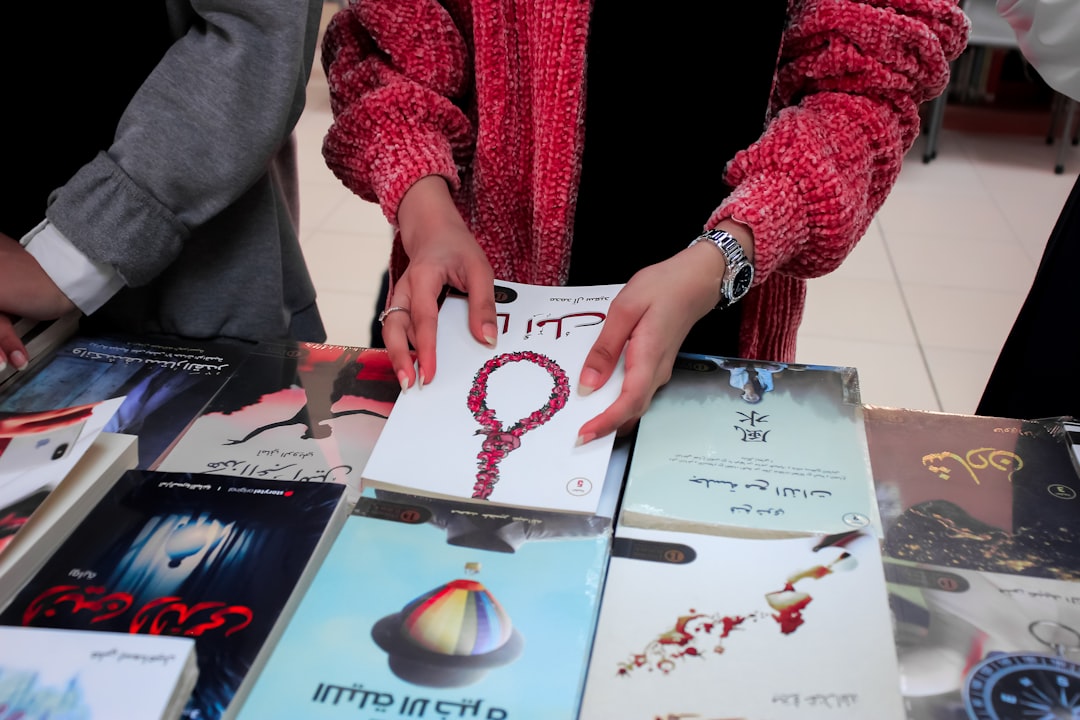
A woman reads a minority language poetry collection in a European library, surrounded by shelves of multilingual literary.

Minority language publishing is one of Europe’s greatest cultural secrets, a living archive of the continent’s deepest identities, and it is producing writers of extraordinary originality right now.

Why small languages create bold literature

Europe is a continent of astonishing linguistic variety. It is home to a rich variety of languages, and this diversity reflects the continent’s history, cultures, and communities. Yet the most striking literary energy does not always come from the largest linguistic traditions. It comes from writers who work within constraints, writers who know that every sentence they publish carries the weight of an entire community’s memory.

Minority language publishing operates under real pressure. Some writers work in a language that a national jury might not read, or that their own state does not recognise, despite the fact that it is spoken by millions. Others write in a language so small that their readership at home is limited to hundreds, and there are few literary translators who can render their work in other languages. That pressure does not diminish a writer. It sharpens them.

Safeguarding linguistic diversity enriches global cultural heritage and knowledge. By carefully documenting minority languages, we preserve not only words and grammar but also the unique cultural narratives they carry. Literature is the most powerful form of that documentation. It is living, breathing heritage.

How the EU supports minority language publishing

The European Union has built a concrete structure of support around minority language publishing. The European Charter for Regional or Minority Languages, adopted by the Council of Europe, protects and promotes these languages. To help maintain linguistic diversity in the EU, the Creative Europe programme supports literary translation. This allows wider access to important literary works.

The results are measurable. Creative Europe awards over 5.5 million euros to support the translation, publication, and promotion of 499 European works of fiction reaching readers across Europe and beyond. These 46 projects comprise works of fiction selected for translation from 36 into 24 languages, with a prevalence of youth literature and novels. This is not a symbolic gesture. It is a serious, sustained investment in literary heritage.

The funding scheme for the circulation of European literary works supports on average 40 projects per year. These translate and promote 500 European literary works from and into at least 40 languages. An important factor of the scheme is how it supports works written in less widely spoken languages to develop their distribution to larger markets in Europe and beyond.

The platforms that amplify minority voices

Beyond direct funding, the EU supports specific platforms designed to bring minority and lesser-heard literary voices to a continental audience. The Versopolis platform encourages diversity of representations by fostering the discovery of new voices in less widely spoken languages. It creates opportunities for more than 300 emerging poets, supports the translation of their works into European languages, and enables their publication in printed booklets, e-books, and on the Versopolis website. It also supports poets’ mobility by organising guest appearances at more than 30 European literary festivals.

The European Union Prize for Literature plays an equally vital role. It recognises authors from various linguistic and cultural backgrounds, including those writing in lesser-spoken languages. The EUPL supports translations to ensure its authors reach a wider readership, and it provides emerging writers with a platform to gain recognition and new opportunities, often serving as a baseline for international success.

The prize promotes literary works that foster cultural exchange and mutual understanding, thus enhancing our shared European identity. It also facilitates cross-border mobility for cultural professionals and expands the circulation of European literary works. In this way, a novel first written in Upper Sorbian or Breton becomes part of a conversation the entire continent can join.

-

A filmmaker reviews a script at a production desk, representing the creative process behind a co-production treaty.

Co-production treaty and European cinema

10/09/2026
A crowd of people seated on a summer evening watching an open-air cinema screening at a European festival

Open-air cinema festivals in Europe

05/08/2026
A competitive runner crosses the finish line at a stadium during a European athletics championship event, celebrated by fans.

European athletics and the EU city brand

19/07/2026
A filmmaker reviews footage on a laptop during a Creative Europe supported film production project

Creative Europe: funding films, music, theatre

15/07/2026
A writer reads from her nominated fiction at a ceremony celebrating the EU Prize for Literature

EU Prize for Literature and small voices

28/06/2026
Wiener Stadthalle arena packed with fans during Eurovision 2026 live show in Vienna Austria

Eurovision 2026: Host City Guide and Fan Experience

07/05/2026

A writer signs copies of a minority language publishing debut at a European literary festival.

Expert perspective on minority language publishing

Minority language literature carries a political and emotional charge that is difficult to replicate in dominant linguistic traditions. Writers in these communities occupy a unique position: they are simultaneously artists and custodians of a living heritage. The decision to write and publish in a minority language is rarely a neutral or purely aesthetic choice. It is an assertion of identity, a claim on the future, and an act of resistance against cultural homogenisation. When these works find their way into translation and reach wider European audiences, they do not lose their specificity. On the contrary, they demonstrate that particular and universal can coexist in a single literary voice. The EU’s translation support mechanisms are not simply administrative tools. They are instruments of cultural justice.

Industry perspective, literary translation and minority language publishing professionals in Europe

The heritage argument for minority language literature

Some critics ask whether minority language publishing is economically viable without institutional support. The question misunderstands the value at stake. The EU’s foundational motto, “United in diversity,” encapsulates its attempt to build unity across linguistic and cultural plurality. Literature in minority languages is the most intimate expression of that plurality.

The aim of programmes like New Voices from Europe is to highlight the richness and diversity of European writing in all its genres and languages, including minority languages. Richness, in this context, is not metaphorical. It describes an actual civilisational resource, centuries of stories, forms, and ways of seeing the world that exist only in these languages and nowhere else.

The European Charter for Regional or Minority Languages is the only legal instrument worldwide for the promotion of the public use of these languages. The fact that such an instrument exists at all reflects a European consensus: the loss of any language is a loss for all of us. The loss of its literature is irreversible.

A literary translator works on a manuscript at a desk, supporting the circulation of minority language publishing.

Conclusion: minority language publishing is Europe’s literary conscience

Minority language publishing is not a niche concern for specialists. It is a mirror of everything that makes European civilisation extraordinary. The main objectives of the Creative Europe programme for the books and publishing sector are to increase the circulation and linguistic diversity of literary works in Europe and beyond, diversify the audience of European literature, and strengthen the competitiveness of the sector. These are civilisational goals, not just cultural policy targets.

Every reader who discovers a novel in Frisian, a poem in Ladin, or a short story in Gaelic touches something ancient and irreplaceable. Minority language publishing gives Europe its conscience, its texture, and its truest depth. Support it, read it, and celebrate it. The writers who work within these languages deserve a Europe that listens.

Discover more about minority language publishing

  • Circulation of European Literary Works, Creative Europe
  • 46 Projects Selected for the 2025 Creative Europe Literary Works Call, European Commission
  • Linguistic Diversity in the EU, European Commission Translation Services

author avatar
Valentina Romano
Valentina Romano studied art history at La Sapienza in Rome and has spent her career writing about European cultural heritage, architecture, and the continent's artistic identity. From the Vatican Museums to contemporary Roman design studios, she covers Europe's past and present with equal passion. Her work celebrates the depth and diversity of European civilisation.
See Full Bio
Previous Post

EU Ecolabel home routine that cuts waste

Next Post

Supplier contracts: why September wins

Related Posts

A filmmaker reviews a script at a production desk, representing the creative process behind a co-production treaty.
Culture

Co-production treaty and European cinema

10/09/2026
A crowd of people seated on a summer evening watching an open-air cinema screening at a European festival
Culture

Open-air cinema festivals in Europe

05/08/2026
A competitive runner crosses the finish line at a stadium during a European athletics championship event, celebrated by fans.
Culture

European athletics and the EU city brand

19/07/2026
A filmmaker reviews footage on a laptop during a Creative Europe supported film production project
Culture

Creative Europe: funding films, music, theatre

15/07/2026
A writer reads from her nominated fiction at a ceremony celebrating the EU Prize for Literature
Culture

EU Prize for Literature and small voices

28/06/2026
Next Post
A procurement manager reviews EU supplier contracts at her desk before Q4 negotiations begin

Supplier contracts: why September wins

Leave a Reply Cancel reply

Your email address will not be published. Required fields are marked *

Truelang, tranlation plugin Truelang, tranlation plugin Truelang, tranlation plugin
No Result
View All Result

Our Focus

EUwebzine is your international window on Europe: lifestyle, business, culture, sports and events for a global audience following the continent's evolving story.

Our Readers

EUwebzine addresses readers who engage with Europe at a high level: professionally, financially, strategically, and as decision-makers in their fields.

Our Approach

Lifestyle, policy, and culture are integrated as context and indicators of economic cohesion, political direction, and Europe's role on the global stage, not standalone entertainment.

Recent Post

  • State aid rules for EU startups
  • Forest bathing programmes in Europe

© 2026 EUwebzine by NOOR & NOOR — part of WEBZINE.world.

Welcome Back!

Login to your account below

Forgotten Password? Sign Up

Create New Account!

Fill the forms bellow to register

All fields are required. Log In

Retrieve your password

Please enter your username or email address to reset your password.

Log In
Manage Consent
To provide the best experiences, we use technologies like cookies to store and/or access device information. Consenting to these technologies will allow us to process data such as browsing behavior or unique IDs on this site. Not consenting or withdrawing consent, may adversely affect certain features and functions.
Functional Always active
The technical storage or access is strictly necessary for the legitimate purpose of enabling the use of a specific service explicitly requested by the subscriber or user, or for the sole purpose of carrying out the transmission of a communication over an electronic communications network.
Preferences
The technical storage or access is necessary for the legitimate purpose of storing preferences that are not requested by the subscriber or user.
Statistics
The technical storage or access that is used exclusively for statistical purposes. The technical storage or access that is used exclusively for anonymous statistical purposes. Without a subpoena, voluntary compliance on the part of your Internet Service Provider, or additional records from a third party, information stored or retrieved for this purpose alone cannot usually be used to identify you.
Marketing
The technical storage or access is required to create user profiles to send advertising, or to track the user on a website or across several websites for similar marketing purposes.
  • Manage options
  • Manage services
  • Manage {vendor_count} vendors
  • Read more about these purposes
View preferences
  • {title}
  • {title}
  • {title}
No Result
View All Result
  • Home
    • Our Authors
    • Media Kit
    • Terms and Conditions
    • Cookie Policy
    • Contact
  • Business
  • Culture
  • Gastronomy
  • Travel
  • Sustainable living
  • Insights
    • News
    • Beauty
    • Kids
    • Well-being
    • Creativity
    • Sports
  • Global Europe
  • Local Guide
    • Activities in Europe
    • Hotels in Europe
    • Nightlife in Europe
    • Restaurants in Europe
    • Services in Europe
    • Shopping in Europe

© 2026 EUwebzine by NOOR & NOOR — part of WEBZINE.world.

Not enough quota to unlock this post
Unlock left : 0
Are you sure want to cancel subscription?
Verified by MonsterInsights
enEnglishdeDeutschesEspañolfrFrançaisnlNederlands