

CONTACT
  • Login
  • Register
Upgrade
EUwebzine
Advertisement
  • Home
    • Our Authors
    • Media Kit
    • Terms and Conditions
    • Cookie Policy
    • Contact
  • Business
  • Culture
  • Gastronomy
  • Travel
  • Sustainable living
  • Insights
    • News
    • Beauty
    • Kids
    • Well-being
    • Creativity
    • Sports
  • Global Europe
  • Local Guide
    • Activities in Europe
    • Hotels in Europe
    • Nightlife in Europe
    • Restaurants in Europe
    • Services in Europe
    • Shopping in Europe
  • Home
    • Our Authors
    • Media Kit
    • Terms and Conditions
    • Cookie Policy
    • Contact
  • Business
  • Culture
  • Gastronomy
  • Travel
  • Sustainable living
  • Insights
    • News
    • Beauty
    • Kids
    • Well-being
    • Creativity
    • Sports
  • Global Europe
  • Local Guide
    • Activities in Europe
    • Hotels in Europe
    • Nightlife in Europe
    • Restaurants in Europe
    • Services in Europe
    • Shopping in Europe
No Result
View All Result
EUwebzine
No Result
View All Result
Home Travel

Wine towns worth visiting in late August

Six quietly beautiful EU wine-region towns that reward you with space, character, and the first perfume of the harvest.

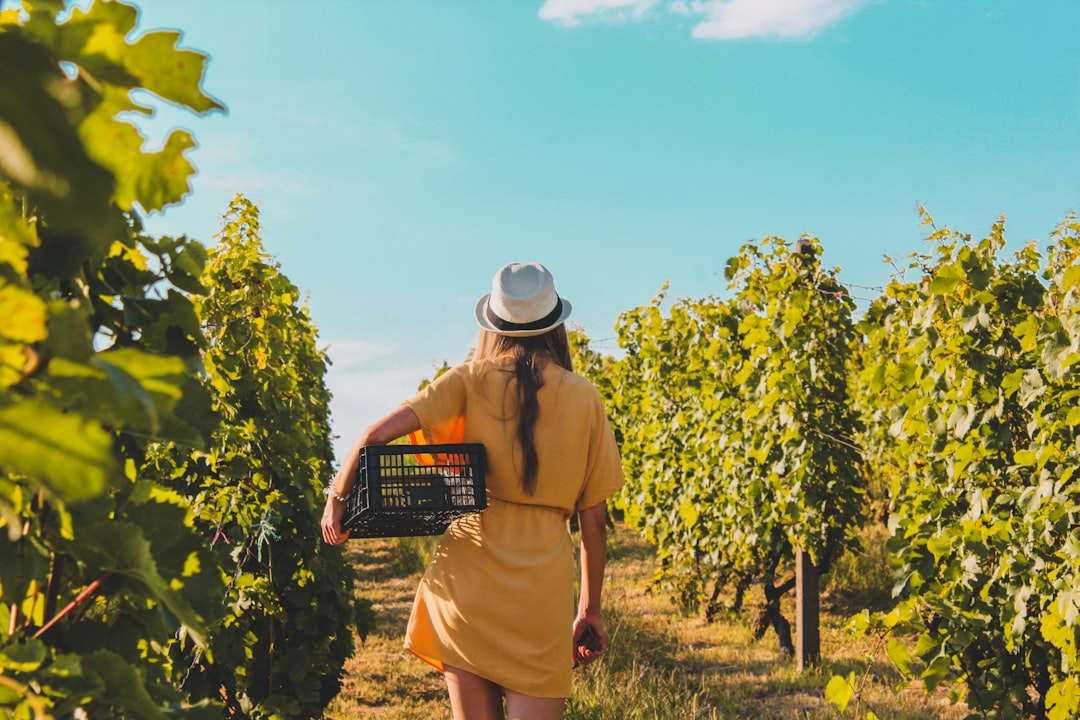
A woman walking in an open cellar in one of Europe's most beautiful wine towns during late August harvest season.

Wine towns across the European Union reveal their finest character in late August, when the vines stand full and golden, the tourist peak is fading, and the first signs of harvest life are stirring in the cellars and on the cobbled squares.

Why late August is the right moment to arrive

Harvest season begins in late August across southern Europe, when vineyards are thick with green canopy and tasting rooms extend onto terraces. This is the window before the vendange crowds arrive. Towns feel local again. Producers have time to talk. The exact timing of the harvest in Europe differs from region to region, depending on the climate, grape varieties, and a range of other variables. That variation is precisely what makes late August so rewarding: some regions are mid-harvest already, while others are still in their final, luminous days of pre-harvest calm.

More than 91% of travellers express interest or strong interest in wine-related travel activities, especially those aged 18 to 44. Yet most wait until September, when the experience becomes crowded and less intimate. Arriving in late August means you secure the atmosphere without the competition for tables, cellar appointments, and hotel rooms.

3 southern towns where the harvest begins earliest

Montilla, Córdoba, Spain. Sitting in the heart of Andalusia, Montilla produces wines from the Pedro Ximénez grape, harvested earlier than almost any other variety in the EU. The town’s whitewashed bodegas open quietly in late August, when the first grapes arrive. The central square and the Museo Garnelo offer culture alongside the cellar visits. Spain features trips to Jerez and Rioja for sherry and red wine tastings, but Montilla remains far less visited, which is its greatest quality.

Greve in Chianti, Tuscany, Italy. The harvest in Tuscany usually starts with white grapes in mid to late August and continues through to October. Greve sits at the centre of the Chianti Classico zone, surrounded by estates producing some of Italy’s most celebrated wines. The triangular main square, Piazza Matteotti, fills each morning with producers and locals. Organic and biodynamic estates near the town reflect a broader commitment to sustainable viticulture that now defines the best of Tuscan terroir.

Pézenas, Hérault, France. This small Languedoc town carries an outsized cultural identity: it was once home to Molière, and its baroque streets remain almost entirely free of mass tourism. The surrounding Hérault vineyards, classified under several appellations, begin their harvest in August. Late-afternoon cellar visits here have the quiet intensity of a private experience.

3 northern towns where the vines are still ripening

Bernkastel-Kues, Moselle, Germany. Bernkastel in Germany is particularly active during early autumn when vintners prepare for harvest. In late August, the town is still in its most photogenic state: the half-timbered houses reflect in the river, the Riesling vines above town are vivid green, and the cellar doors are open without the October crowds. The Moselle’s slate soils produce wines of extraordinary mineral precision, and late August is when the local producers are most willing to discuss the approaching vintage with visitors.

Colmar, Alsace, France. The best way to experience the wine culture of Colmar is to visit in late summer, when this picturesque city hosts its famous wine festival. By late August, the festival atmosphere has calmed and the Alsatian wine route is accessible at a more personal pace. Alsace starts Pinot Gris in warm years in August, giving early visitors a genuine encounter with the vendange. The canal district known as La Petite Venise is at its most serene when the summer crowds thin.

Tokaj, Hungary. Hungary’s Tokaj region provides opportunities to taste historic sweet wines along the Danube River. The town itself is modest in scale but immense in heritage: Tokaj wine has carried a protected designation since 1730. In late August, the Furmint vines are approaching full ripeness, winemakers are attentive and available, and the guesthouses along the main street welcome visitors with the warmth typical of a region not yet overwhelmed by tourism.

An industry perspective on visiting before the crowds

Wine tourism in Europe is growing with real momentum, and that growth is bringing new pressures on the most famous destinations. The travellers who arrive in late August, before the harvest is fully underway, tend to have a qualitatively richer experience than those who follow the crowd in September and October. They receive more time and attention from producers. They see the vineyards in their most beautiful state, just before the physical intensity of picking transforms the landscape. Sustainability is also a growing concern: spreading visitation across a longer season reduces the environmental and social load on individual villages and estates. The data confirms this: two-thirds of wineries across Europe now integrate sustainability into their long-term business strategies, and visitor timing is part of that conversation.

Industry perspective, wine tourism and sustainability professionals in European wine regions

-

A woman sipping from a glass during a wine harvest visit at an EU-protected appellation vineyard in September

Wine harvest road trip through EU appellations

07/09/2026
A woman rests in a private mineral pool at one of Europe's most exclusive thermal retreats, surrounded by stone terraces.

Thermal retreats worth booking in Europe

08/08/2026
A woman gliding through the clear waters of an EU lakeside destination surrounded by mountain scenery

EU lakeside swimming: 7 destinations

03/08/2026
A woman arriving by boat at a private island in the Greek Aegean, embodying the seclusion of EU private island rentals

Private island rentals in the EU

30/07/2026
A woman reading in a private cabin aboard overnight trains across Europe, soft evening light through the window

Overnight trains: build a slow-travel routine

27/07/2026
one of the EU's most scenic mountain villages on a clear July morning, surrounded by green peaks.

Mountain villages cooler than the coast

05/07/2026

The sustainable case for early arrival

Sustainability is moving to centre stage in wine tourism, with two-thirds of wineries rating it as important. Arriving before the peak period is one of the most practical choices a conscious traveller can make. It distributes economic benefit across a longer season and reduces pressure on small communities. Areas such as gastronomy, wine, heritage, and regenerative tourism have been cited by EU policymakers as ways to attract travellers while extending tourism beyond peak seasons.

Choosing late August also means you spend your money in family-run guesthouses and small producers who need it most, rather than in the large-scale operations that dominate the September rush.

A traveller receives a guided tasting at a cellar door in a quiet EU wine town before the September harvest crowds arrive.

The time to go is now

Wine towns in the European Union offer something rare in the late-August window: genuine contact with living culture, unhurried cellar hospitality, and landscapes at their most luminous. These 6 destinations, from Montilla to Tokaj, reward the traveller who arrives with intention rather than impulse. Seek out the wine towns before the harvest crowds define the experience for you. Plan your itinerary with care, book your cellar visits in advance, and let the terroir speak for itself at its own pace.

Discover more about wine towns

  • Global Wine Tourism Report 2025 (UN Tourism / Geisenheim University)
  • European Wine Tourism Index: TUI Musement Rankings
  • Best Time to Visit European Wine Regions: Harvest Guide

author avatar
Sophie Marchand
Sophie Marchand grew up in the 6th arrondissement of Paris, where culture, fashion, and gastronomy were simply part of daily life. She has spent 15 years writing about European luxury lifestyle, sustainable fashion, and the art of living well across the continent. Her work appears at the crossroads of heritage and contemporary European identity.
See Full Bio
Previous Post

Supply chain audits every investor must track

Next Post

Wheat-free bread traditions across the EU

Related Posts

A woman sipping from a glass during a wine harvest visit at an EU-protected appellation vineyard in September
Travel

Wine harvest road trip through EU appellations

07/09/2026
A woman rests in a private mineral pool at one of Europe's most exclusive thermal retreats, surrounded by stone terraces.
Travel

Thermal retreats worth booking in Europe

08/08/2026
A woman gliding through the clear waters of an EU lakeside destination surrounded by mountain scenery
Travel

EU lakeside swimming: 7 destinations

03/08/2026
A woman arriving by boat at a private island in the Greek Aegean, embodying the seclusion of EU private island rentals
Travel

Private island rentals in the EU

30/07/2026
A woman reading in a private cabin aboard overnight trains across Europe, soft evening light through the window
Travel

Overnight trains: build a slow-travel routine

27/07/2026
Next Post
A baker proudly presents a rustic wheat-free bread loaf in a traditional European artisan bakery

Wheat-free bread traditions across the EU

Leave a Reply Cancel reply

Your email address will not be published. Required fields are marked *

Truelang, tranlation plugin Truelang, tranlation plugin Truelang, tranlation plugin
No Result
View All Result

Our Focus

EUwebzine is your international window on Europe: lifestyle, business, culture, sports and events for a global audience following the continent's evolving story.

Our Readers

EUwebzine addresses readers who engage with Europe at a high level: professionally, financially, strategically, and as decision-makers in their fields.

Our Approach

Lifestyle, policy, and culture are integrated as context and indicators of economic cohesion, political direction, and Europe's role on the global stage, not standalone entertainment.

Recent Post

  • State aid rules for EU startups
  • Forest bathing programmes in Europe

© 2026 EUwebzine by NOOR & NOOR — part of WEBZINE.world.

Welcome Back!

Login to your account below

Forgotten Password? Sign Up

Create New Account!

Fill the forms bellow to register

All fields are required. Log In

Retrieve your password

Please enter your username or email address to reset your password.

Log In
Manage Consent
To provide the best experiences, we use technologies like cookies to store and/or access device information. Consenting to these technologies will allow us to process data such as browsing behavior or unique IDs on this site. Not consenting or withdrawing consent, may adversely affect certain features and functions.
Functional Always active
The technical storage or access is strictly necessary for the legitimate purpose of enabling the use of a specific service explicitly requested by the subscriber or user, or for the sole purpose of carrying out the transmission of a communication over an electronic communications network.
Preferences
The technical storage or access is necessary for the legitimate purpose of storing preferences that are not requested by the subscriber or user.
Statistics
The technical storage or access that is used exclusively for statistical purposes. The technical storage or access that is used exclusively for anonymous statistical purposes. Without a subpoena, voluntary compliance on the part of your Internet Service Provider, or additional records from a third party, information stored or retrieved for this purpose alone cannot usually be used to identify you.
Marketing
The technical storage or access is required to create user profiles to send advertising, or to track the user on a website or across several websites for similar marketing purposes.
  • Manage options
  • Manage services
  • Manage {vendor_count} vendors
  • Read more about these purposes
View preferences
  • {title}
  • {title}
  • {title}
No Result
View All Result
  • Home
    • Our Authors
    • Media Kit
    • Terms and Conditions
    • Cookie Policy
    • Contact
  • Business
  • Culture
  • Gastronomy
  • Travel
  • Sustainable living
  • Insights
    • News
    • Beauty
    • Kids
    • Well-being
    • Creativity
    • Sports
  • Global Europe
  • Local Guide
    • Activities in Europe
    • Hotels in Europe
    • Nightlife in Europe
    • Restaurants in Europe
    • Services in Europe
    • Shopping in Europe

© 2026 EUwebzine by NOOR & NOOR — part of WEBZINE.world.

Not enough quota to unlock this post
Unlock left : 0
Are you sure want to cancel subscription?
Verified by MonsterInsights
enEnglishdeDeutschesEspañolfrFrançaisnlNederlands