
Allergen free travel across Europe’s summer festival season is one of the great quiet revolutions in contemporary gastronomy, a shift that places dignity, pleasure, and safety at the centre of every shared table.
What EU law gives you at every festival
The cornerstone of allergen labelling law in the European Union is Regulation (EU) No 1169/2011, known as the Food Information to Consumers (FIC) Regulation. Allergen labelling is one of the most critical elements of food provision across the bloc. For festival visitors, this matters enormously. The regulation made allergen information mandatory for non-prepacked food, including food served in restaurants and cafes, extending beyond earlier rules that only covered prepacked products.
The regulation identifies a list of 14 allergens that must be labelled: eggs, milk, fish, crustaceans, molluscs, peanuts, tree nuts, sesame seeds, cereals containing gluten, soybeans, celery and celeriac, mustard, lupin, and sulphites. At any accredited festival stall across EU member states, vendors must disclose each of these 14 substances. This applies to both prepacked units and non-prepacked menus, where clear disclosure in highlighted text is required.
However, one gap remains in current EU rules. There are no harmonised rules for warning consumers about the unintentional presence of allergens resulting from cross-contamination. This has led to widespread but inconsistent use of precautionary statements such as “may contain traces of nuts.” Awareness of this distinction is essential for anyone navigating a busy outdoor festival.
How to prepare before the festival gates open
Preparation is the most elegant tool a festival visitor carries. Travelling with food allergies can be challenging, but with careful planning, a safe and memorable experience is entirely achievable. Most countries in Europe have coordinated regulations for food vendors and producers to label their ingredients, which makes the region more accessible for people with allergies than many other destinations.
Research specific events before departure. Look up vendors known for good practice with food allergies, and check online to see whether festival caterers or restaurants have published an allergen menu in advance. Many leading European summer festivals now provide digital menus and allergen guides via their official apps or websites. This information rarely appears in printed festival programmes, so a direct search is always worthwhile.

Allergy translation cards are a valuable resource: they carry vital information such as your specific allergens and emergency contact details, written in both English and the local language. At a multilingual summer festival where staff rotate quickly, a clear written card communicates more reliably than a verbal exchange in a noisy environment.
Allergen free choices that never feel like a compromise
The rise of plant-based and free-from catering has transformed the festival landscape across the EU. A wide spectrum of functional and healthy food options now appears at major European food events, including allergen-free food, lactose-free food, vegan food, and dietary solutions for people with food intolerances. These offerings are no longer marginal. They stand alongside heritage produce, craft ferments, and regional specialities with equal pride.
Mediterranean-influenced menus deserve particular attention. Countries like Italy can be especially accommodating for visitors with a milk allergy, as much of the traditional food is prepared with olive oil rather than dairy. Similarly, plant-forward street food stalls in cities such as Vienna, Barcelona, and Amsterdam increasingly label every ingredient on a visible board, reflecting both legal compliance and genuine hospitality culture.
For safety, always ask the vendor directly before ordering. Under EU rules, a hospitality establishment must provide written allergen information at the point of presentation, and if guests are told that allergen information is available, a written information sheet must then be provided on request. Insisting on this written confirmation is both your legal right and your most effective protection.
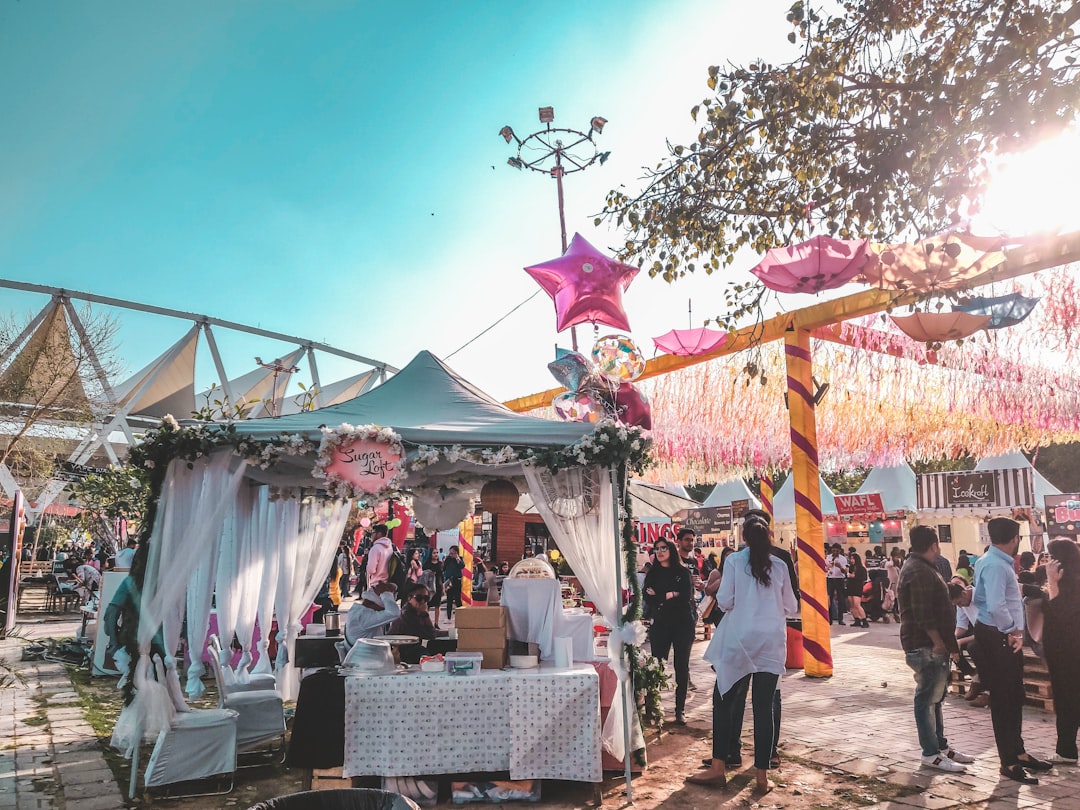





Expert perspective on allergen free eating and festival culture
The conversation around allergen free dining in Europe has matured considerably. Festival operators increasingly understand that inclusive menus are not a burden but a genuine mark of quality. The EU regulatory framework provides a strong foundation, but the real shift happens in vendor culture, where chefs and stall holders take personal pride in understanding every ingredient they serve. A visitor who arrives informed and asks clear, specific questions will almost always find a path to a safe and satisfying meal. The growing free-from market across the EU is also driving innovation: allergen free options are becoming indistinguishable in quality from conventional choices, which is precisely where the industry needs to arrive.
Industry perspective, food safety and gastronomy professionals across the European Union
Digital tools that protect every allergen free visitor
Technology now acts as a quiet companion for allergen free festival visitors. Several dedicated apps allow users to scan products, filter menus by allergen profile, and locate nearby vendors with verified free-from certifications. Many EU member state governments also publish national food safety portals that list compliant vendors and registered catering businesses.
The European Commission has announced plans to introduce harmonised EU-wide rules for precautionary allergen labelling, the “may contain” statements found on food packaging. An implementing regulation is expected to be adopted in the fourth quarter of 2027. Until then, digital tools that aggregate vendor information and user reviews fill this gap with practical reliability.
Beyond apps, social media communities organised around free-from travel in Europe provide real-time festival intelligence. Members share vendor names, stall locations, and allergen confirmation reports within hours of a festival opening. Different countries in Europe have varying levels of awareness and accommodation for food allergies, so researching allergy awareness specific to your destination country adds an important layer of preparation.

Conclusion: allergen free and fully present at every festival
Allergen free living does not diminish the festival experience. It focuses it. Across the European Union, a robust legal framework, a growing free-from market, and a culture of ingredient transparency mean that more visitors than ever can eat with confidence under an open summer sky. Research your destination, carry your translation card, ask for written confirmation, and use every digital tool available. The allergen free table at a European summer festival is no longer the exception. It is, increasingly, a place of genuine pleasure, elegantly set and worthy of the occasion.
Explore our full gastronomy series at EUwebzine for more guides to eating with intention across Europe’s most celebrated cultural events.
Discover more about allergen free
- Food Information to Consumers – European Commission
- EU allergen labelling: new harmonised rules for “may contain” statements, Bird & Bird legal analysis
- European Federation of Allergy and Airways Diseases Patients’ Associations: food labelling guidance